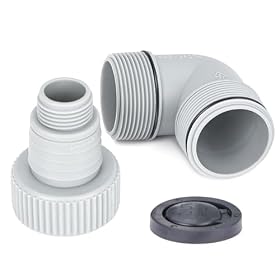
A narrow sump pit can limit more than the pump’s outside diameter. Check the basin opening, pump body, float movement, discharge outlet, and service clearance before relying on an adapter.
What do you need help with?
Open an answer, or tell us what we should cover next.
Answered in this guide
Choose a sump pump for a narrow basin
Choose a pump that fits without being forced into place, leaves the intake open, allows the float to move fully, and provides a workable discharge route.
Pump diameter can mean the motor body, base, or another wide point. Height, the float assembly, outlet, and other dimensions may also affect whether the pump fits the pit.
Treat pump-body fit and discharge-pipe compatibility as separate checks. The pump must fit inside the basin, while its outlet must connect to compatible piping without restricting the installation.
Requests help us prioritize the next guide. No email required.
One anonymous request per topic.
A narrow sump pit can prevent a replacement pump from fitting even when its advertised capacity looks suitable. Measure the pit and the pump body first, then check float movement, intake clearance, and discharge connections. A narrow-pit adapter may solve a mounting or connection problem, but it cannot make an oversized pump physically fit or guarantee the same pumping performance.
What “pump diameter” actually means
Sump pump specifications may refer to several different dimensions:
Pump body diameter: The widest part of the motor housing or base.
Pump height: Important when the pit is shallow or the discharge pipe leaves the basin near the top.
Discharge outlet size: The threaded or barbed outlet where the discharge pipe connects. This is not the same as the pump’s body diameter.
Float clearance: The space needed for a vertical or tethered float to rise and fall without touching the basin wall, pump, or piping.
Inlet or intake clearance: The open area around the pump’s strainer or base that allows water to reach the impeller.
Do not choose a pump based only on the discharge outlet size. A pump with a common discharge connection can still be too wide for the basin, or its float can be unable to operate correctly.
How to measure a narrow sump pit
Disconnect power before handling the pump or reaching into the basin. If the pump is connected to a backup system or battery equipment, follow the manufacturer’s shutdown procedure as well.
Measure these areas:
The smallest inside width of the pit opening. Do not measure only the removable lid opening if the basin walls taper inward below it.
The usable floor area. A pump may need to sit flat and upright rather than against the wall.
The vertical clearance. Include the space required for the float to activate the pump.
The discharge-pipe route. The pipe, check valve, and fittings can take up more room than the pump itself.
The location of the inlet openings. The pump must be able to draw water without its intake being blocked by the basin wall or debris.
Use the pump manufacturer’s published dimensions, not a general label such as “compact.” Leave practical clearance around the moving float and intake. The exact clearance depends on the pump design, so follow the installation instructions when they specify a minimum distance.
Product prices and availability are accurate as of the date/time indicated and are subject to change. Any price and availability information displayed on Amazon.com at the time of purchase will apply to the purchase of this product.
What a narrow-pit adapter can and cannot do
The term narrow-pit adapter can describe different products. Some adapters support a pump, position it in a small basin, or connect a pump with one pipe size to another pipe size. Because designs vary, confirm exactly what the adapter is intended to change.
An adapter may help with:
Mounting a compatible pump in a basin with a restricted opening
Replacing a discontinued pump when the manufacturer provides a compatible conversion part
An adapter generally cannot:
Reduce the physical width of the pump motor
Create enough room for a float that is blocked by the basin wall
Correct a pump that is too tall for the pit
Make every discharge-pipe reduction acceptable
Restore flow lost through undersized, restrictive, or poorly routed piping
Do not cut, drill, or modify a pump housing, float, basin, or sealed lid unless the manufacturer specifically permits it. An improvised mount can allow the pump to tip, block the intake, or prevent the float from starting the pump.
Product prices and availability are accurate as of the date/time indicated and are subject to change. Any price and availability information displayed on Amazon.com at the time of purchase will apply to the purchase of this product.
Pump diameter versus discharge-pipe diameter
These are separate fit decisions. The pump body must fit inside the basin, while the discharge outlet must connect to piping that is compatible with the pump and installation instructions.
Reducing the discharge pipe may increase resistance and reduce actual flow. The effect depends on the pump, pipe length, vertical lift, fittings, check valve, and discharge route. A pump that moves water effectively through a properly sized discharge system may perform poorly when connected to a restrictive setup.
When replacing a pump, compare:
Pump body dimensions
Discharge outlet size and thread type
Recommended discharge-pipe size
Maximum vertical lift and expected flow at that lift
Check-valve compatibility
Available room for elbows and unions inside the basin
A fitting that physically screws onto the pump is not automatically an approved or suitable installation.
Product prices and availability are accurate as of the date/time indicated and are subject to change. Any price and availability information displayed on Amazon.com at the time of purchase will apply to the purchase of this product.
Choosing a pump for a narrow basin
A suitable pump should meet all of these conditions:
It fits without forcing it into place
The pump should sit securely on the basin floor or on its approved support. Do not wedge it tightly between the wall and piping. Vibration, movement, and service removal can become problems in a cramped installation.
The float can move through its full cycle
Pour water into the basin slowly while observing the float, if the design allows safe observation. The float should rise freely, start the pump, and shut it off without contacting the wall, lid, pipe, or cord. Never bypass a float switch to solve a clearance issue.
The intake remains open
Keep the pump’s intake away from sludge, gravel, and objects that could obstruct it. If the basin has sediment or debris, clean it according to the pump and basin instructions before installing the replacement.
The discharge can be routed without sharp restrictions
A narrow basin can make the pipe bend too tightly or place the check valve in a cramped position. Use fittings approved for the pump and avoid a layout that puts strain on the pump outlet.
The pump can be removed later
Leave enough room to inspect the pump, clean the basin, replace the check valve, and service the discharge connection. A pump that fits only after permanent obstruction or difficult disassembly is not a practical installation.
If your replacement pump does not fit
Work through the problem in this order:
Recheck the pump’s widest point, including the base and float assembly.
Confirm the basin’s narrowest internal dimension, not just the lid opening.
Check whether the float can move without touching anything.
Temporarily identify which pipe fittings occupy the available space, without operating the pump disconnected from its required plumbing.
Compare the manufacturer’s approved narrow-basin or adapter options.
Check whether a different pump design, such as a vertical-float model, is specified for the available space.
Do not remove a float guard, shorten a float, or alter electrical components to gain clearance. If no approved pump or adapter provides safe float movement and service access, replacing the basin with a larger, properly installed basin may be more reasonable than forcing a pump into the existing pit. Basin changes can involve plumbing, concrete, waterproofing, and electrical considerations; consult the manufacturer and a qualified professional where appropriate.
When an adapter is the right purchase
An adapter is worth considering when the manufacturer identifies it as compatible with the specific pump, basin, and connection. Before buying, verify:
The adapter’s intended pump and basin dimensions
Whether it supports the pump or only changes the pipe connection
Whether the float remains unobstructed
The required discharge-pipe size
Whether a check valve or additional fitting is required
Whether the adapter can be removed for maintenance
If the listing gives no clear compatibility information, treat that as a warning. For a primary sump pump, a known-compatible pump and fitting arrangement is preferable to a generic adapter that creates uncertainty during a storm.
Bottom line
For a narrow pit, pump diameter is only one part of the fit. Confirm the pump body, height, float travel, intake clearance, pipe routing, and approved discharge connection together. Use a narrow-pit adapter only when its compatibility and purpose are clear. If an adapter leaves the float blocked, restricts the intake, or makes service difficult, choose a different pump or address the basin rather than modifying the installation.
FAQ
Can a narrow-pit adapter make any sump pump fit?
No. An adapter may help with mounting or an approved connection, but it cannot reduce the pump’s body size or create clearance for a blocked float or intake. Confirm compatibility with the pump and basin manufacturer.
Is pump diameter the same as discharge-pipe diameter?
No. Pump diameter describes the physical body of the pump. Discharge-pipe diameter describes the outlet and plumbing connection. Both must be compatible, but one does not determine the other.
What is the most important measurement in a narrow sump pit?
Measure the basin’s smallest inside width, the pump’s widest point, and the clearance needed for the float. Also check pump height, intake clearance, and room for the discharge pipe and check valve.
Can I remove the float guard or shorten the float to fit a narrow basin?
Do not do so unless the manufacturer specifically approves the modification. Altering the float or its guard can prevent reliable automatic operation and may create a flood risk.
When should I replace the basin instead of using an adapter?
Consider a larger or properly configured basin when no approved pump provides safe float movement, intake clearance, and service access. Basin changes may require plumbing, structural, waterproofing, or electrical work, so follow local requirements and consult a qualified professional when needed.