The best sump pump for a narrow pit is compact enough to fit without restricting the float or discharge pipe. Compare pump dimensions, switch style, intake design, and service access before buying.
Best sump pump for a narrow pit
The best sump pump for a narrow pit is one that leaves enough room for the float switch to move freely, the pump to sit upright, and the discharge connection to fit without sharp bends. A pump that technically fits the basin can still fail if its float gets trapped against the wall or the intake is blocked by sediment.
Before choosing a replacement, measure the pit’s inside diameter and depth, check the pump’s actual dimensions, and identify how much clearance the switch needs. For especially tight pits, a vertical float switch or electronic switch may be more practical than a wide tethered float.
What to measure before buying
Do not rely only on the nominal size of the sump basin. Measure the usable space inside the pit.
Inside diameter
Measure the narrowest inside diameter from wall to wall. Account for:
The pump housing
The float switch and its movement path
The discharge pipe or elbow
The power cord and plug position
Any basin liner ribs, inlet pipes, or other obstructions
Leave clearance around the pump rather than forcing it against the basin wall. The exact clearance requirement depends on the manufacturer’s instructions and switch design.
Pit depth and water level
Measure from the bottom of the pit to the point where the pump should start and stop. A pump that sits too tall may not allow the float to rise enough. A pump that sits too low can have difficulty removing the last portion of water or may rest in sediment.
Check the pump’s minimum water level and operating position in its manual. Some models require the pump to remain submerged during operation, while others are designed to handle lower water levels.
Discharge pipe size and direction
Identify the existing discharge pipe diameter before buying. A mismatch may require an adapter or replacement discharge section. In a narrow pit, the direction of the outlet matters almost as much as the pump’s width: a side outlet with a bulky elbow can consume valuable clearance.
Avoid tight bends, unnecessary adapters, and unsupported pipe weight. These can restrict flow and place stress on the pump’s discharge fitting.
Features that matter in a narrow pit
Compact pump housing
Look for the manufacturer’s published width, length, and height—not just a label such as “compact.” Compare those dimensions with the basin’s narrowest area and the space occupied by the discharge connection.
A smaller housing is useful, but it should not come at the expense of a suitable intake, reliable switching, or adequate pumping capacity for the installation.
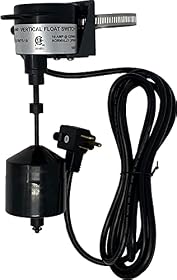
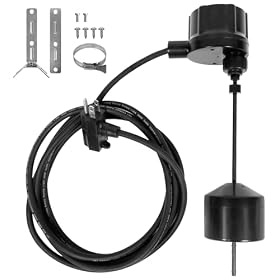
Vertical float switch
A vertical float switch generally moves up and down within a smaller footprint than a tethered float. This can make it a good choice when the pump sits close to the basin wall.
However, the switch still needs an unobstructed travel path. Check for interference from the liner, pump cord, discharge pipe, and sediment. If the switch cannot complete its movement, the pump may cycle incorrectly or fail to start.
Electronic or sensor-based switching
Some pumps use a sensor or electronic control instead of a mechanical float. This can eliminate float-clearance problems, but it introduces other considerations, such as compatibility with the installation, cleaning requirements, and the manufacturer’s specified minimum water level.
Follow the instructions for sensor cleaning and positioning. Do not assume that an electronic switch is automatically better for every narrow pit.
Bottom intake and debris handling
A pump with a low intake can remove water from near the bottom, but the intake must remain clear of gravel, sludge, and other debris. A narrow basin can make cleaning more difficult, so consider whether you can lift the pump out and inspect the intake easily.
If the pit contains sediment, use a suitable pump design and keep the basin clean. Do not place a pump directly on loose debris if the manufacturer calls for a solid, stable base.
Service access
A pump that barely fits may be difficult to remove when the check valve, float, or power cord needs attention. Leave enough room to disconnect the discharge pipe and lift the pump out without damaging the pipe or cord.
Product prices and availability are accurate as of the date/time indicated and are subject to change. Any price and availability information displayed on Amazon.com at the time of purchase will apply to the purchase of this product.
Choose the pump capacity carefully
A narrow pump is not necessarily an adequate pump. Pump capacity depends on the amount of water entering the pit and the vertical height and resistance of the discharge route.
When comparing pumps, review the manufacturer’s performance information at the required lift height. A pump’s advertised maximum flow at little or no lift may not represent the flow available in your installation.
Consider:
The vertical distance from the pump to the discharge outlet
The discharge pipe diameter
The number of elbows and fittings
The length of the discharge run
The likelihood of heavy inflow during storms
If the pit fills quickly or the basement is at significant flood risk, selecting solely for the smallest physical size can be a poor tradeoff. The pump must fit and still move water effectively through the actual discharge system.
Product prices and availability are accurate as of the date/time indicated and are subject to change. Any price and availability information displayed on Amazon.com at the time of purchase will apply to the purchase of this product.
Tethered versus vertical float switches
A tethered float can work well in a spacious basin, but it usually needs more lateral room to swing. In a narrow pit, the float may strike the wall, catch on the discharge pipe, or become trapped beside the pump.
A vertical float is often easier to accommodate, provided the pump and switch dimensions fit the basin. Before installation, manually check the float’s full travel with the power disconnected. It should move freely from the off position to the on position without rubbing or catching.
Never modify, tie up, shorten, or bypass a float switch unless the manufacturer specifically provides instructions for that adjustment. If the switch cannot move freely, choose a different pump or switching arrangement.
Product prices and availability are accurate as of the date/time indicated and are subject to change. Any price and availability information displayed on Amazon.com at the time of purchase will apply to the purchase of this product.
Installation considerations
Use a stable base
Set the pump upright on a firm, level surface that will not block the intake. If the basin bottom is uneven or filled with loose sediment, clean it before installation and follow the pump manufacturer’s instructions for positioning.
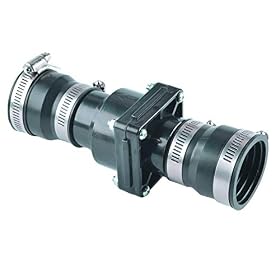
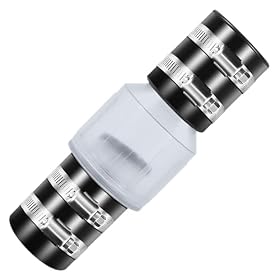
Install a check valve correctly
A check valve helps prevent discharged water from flowing back into the pit when the pump stops. Install it in the orientation marked on the valve and support the discharge pipe so its weight is not carried by the pump outlet.
A poorly installed or stuck check valve can reduce performance, cause repeated cycling, or allow water to drain back into the basin. Make sure the valve and fittings do not interfere with the float.
Protect the electrical connection
Keep the plug and connection dry, use a properly grounded receptacle, and follow local electrical requirements. Do not use an extension cord unless the pump manufacturer specifically permits it and the cord is suitable for the load and environment.
If the receptacle, wiring, or ground-fault protection is questionable, have the installation inspected by a qualified electrician. Unplug the pump before reaching into the pit or handling the pump, switch, or discharge assembly.
Test the complete installation
After installation, add water to the basin and confirm that:
The pump starts at the intended water level.
The float or sensor does not contact the basin, pipe, or cord.
The pump discharges water outside the building.
The check valve prevents obvious backflow after shutoff.
The pump stops normally without rapid cycling.
No fitting or connection leaks.
Repeat the test after securing the discharge pipe and replacing the basin cover, if used. The cover must not press on the switch or power cord.
A very narrow or shallow pit may not provide enough room for a conventional pump and switch to operate reliably. In that situation, consider whether the basin should be replaced with a larger approved basin rather than forcing a pump into inadequate space.
A larger basin can provide more float clearance, reduce rapid cycling, and make maintenance easier. Basin replacement may involve cutting flooring, connecting drainage, and working around plumbing or electrical systems, so get professional help when the work exceeds your experience or local requirements.
For flood-prone areas, a backup pump on a separate power source or battery system may be more valuable than choosing a marginally smaller primary pump. The backup must also fit the basin and have a switching system that will not interfere with the primary pump.
Bottom line
For a narrow pit, prioritize the pump’s actual dimensions, switch clearance, intake position, and outlet layout. A compact pump with a vertical or appropriately designed switch is often easier to install than a tethered-float model, but the right choice still depends on the basin’s measurements and the discharge system’s required capacity.
If no pump allows free switch movement and practical service access, replace or enlarge the basin rather than accepting an unreliable installation.
FAQ
What type of float switch is best for a narrow sump pit?
A vertical float switch is often easier to fit because it needs less side-to-side space than a tethered float. It still needs a clear vertical travel path and must not contact the basin, discharge pipe, cord, or pump.
Can a sump pump sit directly against the basin wall?
It is generally better to leave clearance around the pump. Contact with the wall can restrict the intake, transmit vibration, or interfere with the float. Follow the pump manufacturer’s positioning instructions.
How do I know if a sump pump is powerful enough for my pit?
Compare the manufacturer’s flow information at the actual vertical lift and discharge conditions, not only the maximum flow rating. Pipe size, elbows, valve resistance, and discharge length all affect delivered flow.
Should I replace a narrow sump basin instead of buying a smaller pump?
Replace or enlarge the basin when no available pump provides reliable switch movement, adequate intake clearance, or reasonable service access. A larger basin can also reduce short cycling and make maintenance easier.