A pre-plumbed sump pump backup system usually costs more upfront than a DIY setup, but the difference is not just the price of the pump. You also need to account for the battery, charger, check valves, discharge plumbing, fittings, installation labor, and the risk of an incorrect setup. DIY is often the lower-cost choice when the sump basin and discharge line are accessible and you can safely modify the plumbing. A pre-plumbed or professionally installed system can make more sense when reliability, limited access, or flood damage risk is the priority.
Backup Systems · Mon Sep 07
Cost of a pre-plumbed backup system versus DIY
A DIY sump pump backup can cost less upfront, but a pre-plumbed system may be worth the added expense when installation time, reliability, battery setup, and flood risk matter.
What “pre-plumbed backup system” usually means
A pre-plumbed backup system is arranged so the backup pump, discharge piping, check valve, and controls are already assembled or installed as a coordinated setup. Depending on the product and installation, it may still require final connections, a battery, electrical work, or discharge modifications.
Do not assume that “pre-plumbed” includes every part needed for operation. Check whether the quoted or listed package includes:
- The backup pump
- A battery or battery box
- A charger or controller
- Backup discharge pipe and fittings
- A check valve
- A float switch or water-level sensor
- A replacement or modified sump-basin cover
- Installation labor
- Battery testing and commissioning
The exact contents vary, so compare complete systems rather than pump-only prices.
Backup pump system
 2500 Watt Sump Pump Backup Battery System, Automatic Switching to Battery Inverter Power, Professional Backup…VIOPUMPO
$319.99 as of
View on Amazon Cantonape 2000W Sump Pump Backup Battery System, Pure Sine Wave OutputCantonape
$181.99 as of
View on Amazon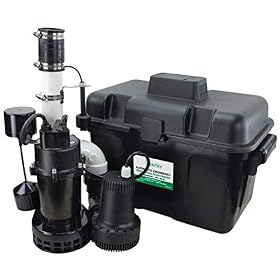 Basement Sentry Battery Backup Sump Pump System Combo (Pre-Assembled) Primary Sump Pump and Battery Back-up…Star
$365.00 as of
View on Amazon
Product prices and availability are accurate as of the date/time indicated and are subject to change. Any price and availability information displayed on Amazon.com at the time of purchase will apply to the purchase of this product.
Main cost difference: equipment versus labor
A DIY installation can reduce labor costs, but you take responsibility for selecting compatible parts and assembling them correctly. A pre-plumbed or professionally installed system shifts more of that work to the installer or supplier.
Typical DIY cost categories
A DIY budget may include:
- Backup pump: Choose a pump designed for backup-sump use and sized for the required lift and discharge route.
- Battery: A battery-powered pump generally needs a compatible deep-cycle battery or the battery type specified by the manufacturer.
- Charger or controller: Some systems include these components; others require them separately.
- Check valves: The primary and backup pumps may need separate valves or a configuration specifically approved by the manufacturer.
- Discharge plumbing: Pipe, adapters, unions, and fittings can add more than expected, especially if the backup pump needs a separate discharge route.
- Basin cover modifications: A sealed or crowded cover may need replacement or careful modification to accommodate plumbing and wiring.
- Consumables and tools: Primer, cement, clamps, sealant, supports, and cutting tools may be necessary.
Typical pre-plumbed or installed-system cost categories
A professional quote may include most of the equipment above, plus:
- Labor for removing or rearranging existing plumbing
- Pump and check-valve installation
- Battery placement and charger connection
- Discharge-line routing
- Alarm or controller setup
- Testing during normal and backup operation
- Cleanup and limited workmanship coverage
Ask for an itemized quote. A low initial price may exclude the battery, discharge modifications, electrical work, or difficult access to the basin.
Backup battery
- 2500 Watt Sump Pump Backup Battery System, Automatic Switching to Battery Inverter Power, Professional Backup…VIOPUMPO
$319.99 as of
View on Amazon  Basement Sentry Automatic Emergency Backup Sump Pump System (12V Battery Powered) Provides Additional Protection Against…Star
$165.00 as of
View on Amazon 1500W Primary Sump Pump Backup System, Basment Protection Backup InverterMiumoon
$169.99 as of
View on Amazon
Product prices and availability are accurate as of the date/time indicated and are subject to change. Any price and availability information displayed on Amazon.com at the time of purchase will apply to the purchase of this product.
When DIY is usually the lower-cost option
DIY is more likely to save money when:
- The sump basin is open and easy to reach.
- The primary discharge line has accessible plumbing.
- There is enough room for a second pump and its float or sensor.
- The backup can discharge through an approved existing route or a straightforward separate line.
- You can identify the correct pipe sizes and fittings.
- You are comfortable testing the system under simulated power-loss conditions.
- No new electrical circuit or permanent wiring is required.
Before buying parts, measure the basin, discharge-pipe size, available vertical lift, and route to the discharge point. A backup pump that fits physically may still be unsuitable if it cannot handle the required lift or if its float cannot move freely.
Backup discharge plumbing
 Superior Pump 99621 Lay-Flat Discharge Hose Kit, 1-1/2-Inch by 25-Foot PVC Hose, with AdaptersSuperior Pump
$27.99 as of
View on Amazon Superior Pump 99622 Lay-Flat Discharge Hose Kit, 2-Inch by 25-footSuperior Pump
$36.99 as of
View on Amazon Hosrivae Y-Type Valve Dual Pump Mounting Kit Basement Sump, 1-1/2 Inch PVC Connector with Backflow…Hosrivae
$45.85 as of
View on Amazon
Product prices and availability are accurate as of the date/time indicated and are subject to change. Any price and availability information displayed on Amazon.com at the time of purchase will apply to the purchase of this product.
When a pre-plumbed or professional system may be worth the extra cost
The additional expense can be reasonable when:
- The basement has a history of flooding.
- The sump basin is difficult to access.
- Existing plumbing is crowded, glued in place, or poorly supported.
- The backup requires a new discharge route.
- The system must work during a power outage when no one is home.
- You are unsure whether the battery, charger, pump, and alarm are compatible.
- A finished basement makes leaks or installation mistakes especially costly.
- Local electrical or plumbing requirements may apply.
A professional installation does not guarantee that every failure is prevented. It does, however, make it easier to verify pump placement, valve direction, discharge support, battery connections, and alarm operation before the next storm.
Hidden costs that can change the comparison
Battery replacement and maintenance
A battery backup is not maintenance-free. Battery type, operating conditions, discharge frequency, and charger behavior affect service life. Include future battery replacement in the ownership calculation. Follow the backup system manufacturer’s battery requirements rather than substituting an incompatible automotive battery or charger.
Separate discharge plumbing
Some backup arrangements share discharge plumbing; others require a separate outlet or a manufacturer-approved connection. Extra pipe, penetrations, fittings, and exterior discharge work can make a DIY project much more expensive than the pump’s listed price suggests.
Check valves and backflow
A check valve prevents discharged water from flowing back into the basin. An incorrectly installed or incompatible valve can restrict flow, make the pump cycle improperly, or cause water to return when the pump stops. Verify the flow direction and use the valve arrangement specified for the system.
Basin and cover changes
The backup pump must fit without interfering with the primary pump, float switches, inlet openings, or discharge pipes. A cover may need replacement if it cannot accommodate both systems while still limiting odors and allowing safe cable and pipe routing.
Electrical work
A battery backup system may use a standard plug-in charger, but any new circuit, outlet, hardwiring, or work near wet locations deserves conservative handling. Do not work on energized electrical equipment in a damp sump area. Follow local requirements and use a qualified electrician when the installation goes beyond a straightforward manufacturer-approved connection.
The cost of a failed installation
A blocked float, reversed check valve, leaking joint, undersized discharge path, or dead battery may not be obvious until heavy rain or a power outage. If the consequences of failure are severe, include inspection and commissioning in the budget rather than comparing pump prices alone.
A simple way to compare the two options
Create two complete totals using the same performance requirements.
DIY total
Add:
- Backup pump
- Required battery
- Charger or controller, if not included
- Check valve or valves
- Pipe and fittings
- Basin cover or plumbing adapters
- Tools and installation supplies
- Any electrical or plumbing work you cannot perform yourself
- Your time and the cost of troubleshooting
Pre-plumbed or professional total
Add:
- Complete backup equipment package
- Battery and charger, if excluded
- Installation labor
- Required discharge modifications
- Electrical work, if needed
- Permit or inspection costs, where applicable
- Follow-up service or commissioning charges
Then compare more than the initial total. Consider whether the system has a clear alarm, whether both pumps can operate without interference, how the battery is maintained, and whether replacement parts are readily available.
Questions to ask before accepting a quote
Ask the installer or supplier:
- What exact parts are included?
- Is the battery included, and what type is required?
- Does the price include a backup check valve?
- Will the backup use a separate discharge line?
- Are discharge penetrations, exterior piping, or fittings included?
- Does the existing basin cover need replacement?
- Will the primary pump remain fully functional after installation?
- How will the system be tested during a power-loss simulation?
- What maintenance is expected for the battery and pump?
- Which components are covered by labor or workmanship protection?
Written answers make it easier to compare a complete DIY bill of materials with a professional quote.
Bottom line
DIY is usually the lower-cost path when the installation is accessible, the plumbing is straightforward, and you can verify compatibility and operation yourself. A pre-plumbed or professionally installed backup system costs more because it includes coordination, plumbing work, setup, and reduced installation risk. Choose the option that provides a complete, testable system—not simply the lowest pump price.
For any installation involving new wiring, wet-location electrical work, structural modifications, or uncertain discharge routing, follow the manufacturer’s instructions and consult a qualified professional.
FAQ
Is a pre-plumbed sump pump backup system worth the extra cost?
It can be, especially when the sump basin is difficult to access, the discharge plumbing is complicated, or flooding would cause substantial damage. The value comes from coordinated parts, installation, and verification—not just from the pump itself.
Does a backup sump pump include a battery?
Not always. Some systems include a battery and charger, while others require them separately. Confirm the exact package contents before comparing prices.
Can a DIY backup sump pump share the primary pump’s discharge pipe?
Sometimes, but only when the arrangement is compatible with both pumps and approved by the manufacturer. A separate discharge route may be required or preferable. Incorrectly combining discharge lines can restrict flow or cause backflow.
What is the most commonly overlooked cost in a backup sump pump installation?
Discharge modifications and the battery are often overlooked. Basin-cover changes, check valves, fittings, electrical work, and future battery replacement can also materially change the total cost.