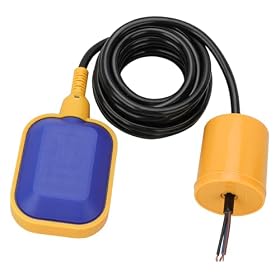
Solid-state and mechanical float switches control sump pumps in different ways. This guide compares reliability, debris tolerance, installation, maintenance, and failure risks so you can choose the right control method.
A mechanical float is usually the simpler choice for a sump pump: rising water moves a float, which operates a switch and starts the pump. A solid-state switch uses electronic sensing instead of a moving float. It can reduce tangling and may fit tight basins, but it introduces electronic components that can be affected by fouling, setup, or power problems.
For most standard sump pits, choose a mechanical float when simple serviceability and easy diagnosis matter most. Consider a solid-state switch when the basin is narrow, a tethered float could snag, or the pump manufacturer specifically designed the system around electronic water-level sensing.
How the two switch types work
Mechanical float
A mechanical switch uses a physical float that rises with the water level. Common designs include:
Tethered floats: The float swings outward as the water rises. They need enough clearance to move without hitting the basin, pump, piping, or cover.
Vertical floats: The float travels up and down on a guide. They generally need less horizontal room than tethered designs.
Diaphragm or pressure-style mechanical switches:Water pressure moves a diaphragm rather than a free-floating ball or capsule.
When the float reaches its activation point, an electrical contact starts the pump. As the water level falls, the switch opens and stops the pump.
Solid-state switch
A solid-state switch has no conventional moving float or mechanical electrical contacts. Depending on the design, it may detect water using electronic probes, an electronic sensor, pressure sensing, or another manufacturer-specific method. Some systems are built into the pump, while others are separate control devices.
Because solid-state technology is not standardized across all sump pumps, check the manufacturer’s instructions for the required pump, voltage, sensor position, minimum water level, and installation orientation.
Solid-state switch versus mechanical float
Consideration
Solid-state switch
Mechanical float
Moving parts
Few or none in the sensing mechanism
Float and switch mechanism move physically
Basin clearance
Often useful in tight spaces
Tethered designs need swing room; vertical designs need less
Tangling risk
Usually lower because there is no tethered float
Tethered floats can snag on piping, cords, or the basin
Troubleshooting
May require checking sensors, controls, and power
Often easier to inspect and test visually
Debris tolerance
Depends heavily on sensor design and cleanliness
Can be affected by debris, obstruction, or restricted movement
Electrical complexity
May include electronic control components
Usually simpler, but contact and cord ratings still matter
Compatibility
Often limited to specified pumps or control systems
Many are available as pump-specific or general replacement controls
Failure mode
Sensor, circuit, calibration, or power-related failure
Sticking, tangling, worn contacts, or water intrusion
Product prices and availability are accurate as of the date/time indicated and are subject to change. Any price and availability information displayed on Amazon.com at the time of purchase will apply to the purchase of this product.
Advantages of a mechanical float
Simple operation and diagnosis
You can often identify a mechanical-float problem by looking into the basin. With the pump disconnected from power, check whether the float moves freely and whether anything blocks its travel. This makes mechanical systems relatively approachable for routine inspection.
Easy replacement in many systems
Mechanical replacement switches and pump assemblies are commonly available, but the replacement must still match the pump’s electrical requirements and control design. A switch that physically fits may not be electrically suitable for the pump’s startup load.
No electronic sensor to foul
A mechanical float does not depend on an electronic probe or circuit board to recognize water. That can be useful in pits containing sediment, iron deposits, or small amounts of debris, although debris can still stop the float from moving.
Product prices and availability are accurate as of the date/time indicated and are subject to change. Any price and availability information displayed on Amazon.com at the time of purchase will apply to the purchase of this product.
Limitations of a mechanical float
The float needs room to move
A tethered float can catch on the discharge pipe, pump cord, basin wall, or other equipment. A narrow basin can also prevent the float from reaching its intended on or off position.
A vertical float reduces the required swing area, but it still needs unobstructed travel. Do not assume that a float will work correctly simply because it fits inside the pit.
Moving parts can wear or stick
The switch can develop mechanical wear, and the float can become dirty or waterlogged depending on its construction. A float that stays on can make the pump run continuously; one that fails to turn on can allow the pit to rise.
Cycling depends on the installation
The switch’s activation and shutoff levels must leave enough water in the basin for proper pump operation while avoiding unnecessary short cycling. A small pit, restricted discharge, or poor float placement can cause frequent starts.
Product prices and availability are accurate as of the date/time indicated and are subject to change. Any price and availability information displayed on Amazon.com at the time of purchase will apply to the purchase of this product.
Advantages of a solid-state switch
Useful in cramped basins
Because the sensing method does not require a swinging tethered float, a solid-state system may be a better fit where the pump, piping, and basin leave little clearance.
Lower risk of float tangling
Removing the tethered float eliminates one common physical failure mode. This does not eliminate all installation problems: wires, sensors, probes, and pump components still need to be positioned according to the instructions.
Potentially fewer mechanical contacts
Solid-state controls avoid the conventional moving electrical contacts used in many mechanical switches. That can help in applications where contact wear is a concern, but the electronic control itself remains another component that can fail.
Limitations of a solid-state switch
Electronic controls are not universal
A solid-state switch may be designed for one pump family, a particular control box, or a specific voltage and wiring arrangement. It should not be treated as a universal replacement for any mechanical float.
Before buying one, verify:
The pump manufacturer permits that type of control.
The switch matches the pump’s voltage and electrical load.
The switch is intended for the pump’s starting current, not only its running current.
The sensor and controller can be installed in the available basin space.
The activation and shutoff levels are appropriate for the basin.
The system has any required backup, alarm, or controller connections.
Sensors can still become unreliable
Electronic probes and sensing surfaces may be affected by sediment, mineral deposits, grease, or standing moisture in places where it should not be. A solid-state design is not maintenance-free simply because it has no moving float.
Diagnosis may be less obvious
A mechanical float that is stuck can often be seen. An electronic sensor may require cleaning, a controller reset, wiring inspection, or manufacturer-specific diagnostic steps. If the control board or sensor has failed, replacement may be more practical than field repair.
Which switch is better for your sump pit?
Choose a mechanical float when:
The basin has enough room for the float’s full movement.
You want a simple, easily inspected control.
The pump manufacturer supplies or recommends a mechanical float.
You are replacing a failed float on an otherwise compatible pump.
The pit is accessible enough for periodic cleaning and inspection.
A vertical mechanical float is often worth considering when a tethered float would have limited swing room.
Choose a solid-state switch when:
The basin is too narrow for a tethered float.
A pump manufacturer specifies an electronic sensor system.
You need to reduce the likelihood of a float catching on nearby equipment.
The complete control system provides the required pump protection, alarm, and compatibility.
Do not choose solid-state control solely because it sounds more advanced. The complete system’s compatibility and installation quality matter more than the label.
Installation and compatibility checks
Before replacing either type of switch, turn off and disconnect power to the pump. If the pump is hardwired, has a dedicated circuit, or requires work inside an electrical box, use a qualified electrician as appropriate and follow local electrical requirements.
Check these items before installation:
Pump electrical rating: Confirm voltage, rated load, and starting-current requirements. Never assume a replacement switch can handle the pump because the plug fits.
Control arrangement: Some pumps use a built-in switch, while others use a separate plug-through switch, controller, or float assembly.
Basin clearance: Make sure the float, sensor, cords, and discharge pipe cannot interfere with one another.
Activation and shutoff levels: Confirm that the water level will not rise above the basin’s safe operating limit and that the pump will not short-cycle.
Water and cord routing: Keep connections and components positioned as specified by the manufacturer. Do not create low points where water can run toward an electrical connection.
Manual operation: If the design permits a manual test, follow the manufacturer’s procedure rather than bypassing safety controls or energizing exposed wiring.
Troubleshooting either type of switch
If the pump does not start, first disconnect power before inspecting the basin. Then work through the likely causes in this order:
1. Check the switch or sensor for fouling
Remove sediment, mineral buildup, and debris from the float’s travel path or from accessible sensing surfaces. Do not scrape, bend, or disassemble an electronic sensor unless the instructions allow it.
2. Check for a blocked or restricted discharge
A clogged discharge pipe or check valve can make the pump appear ineffective even when the switch starts it. Inspect the outlet path, exposed fittings, and check valve for blockage or an installation problem.
3. Check cords, connectors, and seals
Look for loose plugs, damaged insulation, water intrusion, or a connector that is not seated correctly. Do not operate equipment with damaged electrical insulation or exposed conductors.
4. Confirm installation and clearance
A mechanical float must move freely through its entire cycle. A solid-state sensor must be at the correct height and orientation. Confirm that the pump has not shifted and that piping or the basin cover is not interfering with the control.
5. Check for a full basin or abnormal water level
If the pump runs continuously, the inflow may exceed its capacity, the discharge may be restricted, or the shutoff control may not be working. If the basin is nearly empty but the pump keeps running, disconnect power and investigate the switch rather than allowing the pump to run dry.
6. Check the motor and electrical supply last
If the switch appears to operate but the pump does not run, check the breaker, GFCI status, and manufacturer-approved power connections. A tripped breaker can indicate an electrical fault, overload, or pump problem; do not repeatedly reset it without identifying the cause.
If the motor hums, trips protection, smells overheated, or has damaged wiring, stop using it and have the system evaluated by a qualified professional.
When replacement is the sensible option
Replace the switch when it has worn contacts, a damaged housing, unreliable activation, or a recurring mechanical problem that is not caused by installation. Use the exact compatible replacement recommended for the pump or control system.
Replace the entire pump when the motor is failing, the housing is damaged, the correct switch is no longer available, or the pump and control system are incompatible. In a flood-prone home, consider a properly installed backup pump, high-water alarm, and separate power plan rather than relying on a single switch to prevent every failure.
Bottom line
A mechanical float is usually the better choice for straightforward service and easy visual troubleshooting, provided it has enough room to move. A solid-state switch can be a strong fit for cramped basins and systems designed to avoid float tangling, but it must be compatible with the specific pump and may be harder to diagnose when it fails.
Choose the control method recommended for your pump, verify the electrical rating and basin geometry, and inspect the switch or sensor as part of regular sump-pit maintenance.
FAQ
Is a solid-state sump pump switch more reliable than a mechanical float?
Not in every installation. Solid-state switches eliminate some moving parts and float-tangling problems, but their electronic sensors and controls can still foul or fail. A properly sized and unobstructed mechanical float may be the more dependable choice for a simple, serviceable system.
Can I replace a mechanical float with a solid-state switch?
Only if the replacement is approved for the pump and matches its voltage, electrical load, control arrangement, and installation requirements. These switches are not universally interchangeable.
Are solid-state sump pump switches better for narrow pits?
They can be. A solid-state system may avoid the swing clearance required by a tethered float. However, a vertical mechanical float may also work in a narrow pit, so compare the complete installation rather than choosing by switch type alone.
Why does my sump pump run continuously after replacing the switch?
Possible causes include a stuck or incorrectly positioned switch, a blocked discharge, inflow greater than the pump’s capacity, a missing or faulty check valve, or a control that is not compatible with the pump. Disconnect power before inspecting the basin, and stop using the system if the motor overheats or electrical protection trips.