A lake-effect snowmelt week can send large volumes of water toward your foundation while storms may also cause outages. Here is how to choose and prepare a sump pump system before the melt begins.
A lake-effect snowmelt week can overwhelm a marginal sump pump, especially when deep snow melts quickly, rain falls on top of it, or a power outage interrupts pumping. For this situation, choose a primary sump pump with enough capacity for your site, a reliable discharge setup, and a backup plan that can operate during an outage. Before buying, inspect the basin, discharge pipe, check valve, float, and electrical supply—not just the pump itself.
What makes lake-effect snowmelt different?
Heavy snow near a foundation does not always melt gradually. A warm front, rain, or several days above freezing can move a large amount of water into perimeter drains and the sump basin. Frozen ground can also limit surface drainage, directing more water toward the foundation drain system.
The risk is higher when:
The basement has flooded during spring thaws before.
Snow is piled near the foundation or discharge outlet.
The discharge pipe is frozen, buried under snow, or blocked by ice.
The home relies on one pump and utility power.
The sump basin is small or the pump cycles frequently.
A generator, battery backup, or secondary pump is not available.
The goal is not simply to buy the largest pump available. The pump must move water through the actual discharge height and pipe length, and the whole system must continue operating when snow, ice, or a power failure affects one part of it.
Choosing the primary sump pump
Check the pump's performance at lift height
Sump pump capacity is commonly listed in gallons per hour or gallons per minute, but the useful figure is the flow at your system's total head. Total head includes the vertical distance from the pump to the discharge point, plus resistance from horizontal pipe runs, elbows, the check valve, and the outlet arrangement.
A pump that moves a large volume at a low lift may move considerably less water at the height required by your home. Compare manufacturer performance charts at a similar discharge height rather than relying only on the maximum rating.
If the pump cycles constantly during heavy inflow, or the water level rises close to the basin's alarm point, a higher-capacity pump or a second pump may be appropriate. A plumber or waterproofing professional can help estimate inflow and required capacity when the system has flooded before.
Favor a dependable design over unnecessary features
A motor and switch arrangement intended for automatic sump operation.
A float that has enough room to move freely in the basin.
A discharge connection compatible with your existing pipe size.
A manufacturer-rated duty cycle suitable for repeated operation.
An accessible design that allows the switch, impeller, and check valve to be inspected.
Do not assume that horsepower alone determines performance. A pump with a higher horsepower rating may not outperform another pump at the lift height your discharge system requires.
Match the pump to the basin
The pump must fit without interfering with the float or inlet. A narrow basin may not allow a large pump or a backup pump to operate correctly. Measure the basin's inside diameter and depth, and check the pump's installation requirements before purchasing.
If the basin is too small for reliable float movement, replacing the pump may not solve the problem. A basin modification or replacement may be necessary, which is generally work for a qualified waterproofing contractor or plumber.
Product prices and availability are accurate as of the date/time indicated and are subject to change. Any price and availability information displayed on Amazon.com at the time of purchase will apply to the purchase of this product.
Prepare the discharge system before the thaw
A powerful pump cannot protect the basement if water cannot leave the house.
Inspect the discharge pipe
Confirm that the pipe:
Exits the home without kinks or crushed sections.
Drains away from the foundation.
Is not blocked by snow, ice, mud, leaves, or animal nests.
Has a secure outdoor termination.
Does not discharge where water can flow back toward the foundation.
In freezing climates, the exterior portion needs special attention. An outlet buried in snow can freeze shut as meltwater refreezes. Keep the discharge area open and follow local requirements for routing water away from the structure.
Do not remove or modify a discharge component if doing so could cause water to drain against the foundation. If the line repeatedly freezes, have the layout evaluated rather than relying on a temporary extension alone.
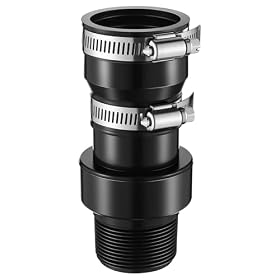
Check the check valve
The check valve helps prevent water in the discharge pipe from flowing back into the basin after the pump stops. A failed or incorrectly installed valve can increase cycling, reduce effective pumping, or cause the pump to restart more often.
With the pump disconnected from power, inspect for visible leaks around the valve and unions. Follow the arrow on the valve body to confirm it points in the direction of discharge. Replace a valve that is cracked, stuck, leaking, or incompatible with the pipe arrangement.
Product prices and availability are accurate as of the date/time indicated and are subject to change. Any price and availability information displayed on Amazon.com at the time of purchase will apply to the purchase of this product.
Add backup protection for outages
Lake-effect storms and heavy snow can cause utility interruptions at the same time that meltwater increases. A backup pump is useful only if it has a dependable power source and is installed so it can operate independently when needed.
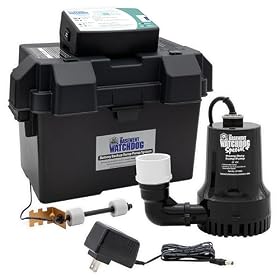
Battery backup pump
A battery-powered backup pump can start when the water level rises above the primary pump's normal switch point or when the primary pump fails. The useful runtime depends on water inflow, battery capacity, pump performance at lift height, battery condition, and temperature.
Whether it includes the pump, control unit, battery, and required plumbing.
The stated flow at your discharge height.
The compatible battery type and required maintenance.
Whether the alarm reports a high-water condition or power failure.
How the backup discharge connects to the existing system.
A battery backup is not a substitute for testing the primary pump and clearing the discharge line. It is a second layer of protection.
Generator or other backup power
A standby or portable generator may operate the primary pump and other essential equipment during an outage, but it must be installed and used safely. Never operate a fuel-burning generator indoors, in a basement, or near doors and windows. Use only an approved transfer arrangement or connection method installed according to electrical requirements; do not backfeed a household circuit with an improvised cord.
If a sump pump is critical to preventing flooding, consult a qualified electrician about the appropriate backup-power arrangement.
A second pump
A second pump in the same basin can provide additional capacity and redundancy, but both pumps need room for their floats and properly arranged discharge connections. A second pump does not help if the basin is too small, the outlet is frozen, or both pumps depend on the same failed power source.
Pre-melt inspection checklist
Complete these checks before the snow begins to soften:
Remove the pump cover carefully and inspect the basin for sediment, debris, or objects that could block the inlet or float.
Verify free float movement. The float should not catch on the pump, liner, pipes, or basin wall.
Check the pump inlet and impeller area according to the manufacturer's instructions. Disconnect power before touching the pump or removing any guard.
Pour water into the basin slowly to confirm that the pump starts automatically, empties the basin, and shuts off without excessive noise or vibration.
Look for leaks at the discharge pipe, check valve, unions, and penetration through the foundation wall.
Clear the outside discharge point of snow and ice while maintaining a route that directs water away from the house.
Test the backup system using the manufacturer's procedure. Confirm that its alarm, battery, float, and discharge connection work.
Inspect the electrical connection. Keep cords and plugs dry, use the required grounded receptacle and protection, and avoid extension cords unless the manufacturer specifically permits them.
Do not run a pump dry or place hands near a powered pump. Disconnect power before cleaning, adjusting, or inspecting components.
Signs the current system is not ready
Replace or repair the system before the thaw if you notice:
The pump runs but moves little water.
The motor hums, stalls, or trips the circuit.
The float sticks or starts the pump inconsistently.
Water flows back into the basin immediately after shutoff.
The pump vibrates excessively or makes grinding sounds.
The basin fills faster than the pump can lower it.
The discharge pipe freezes repeatedly.
The backup battery is swollen, leaking, old, or unable to hold a charge.
A clogged inlet, failed check valve, stuck float, or damaged discharge line may be repairable. A pump with a failing motor, repeated electrical trips, or severe corrosion is usually a replacement candidate rather than a good emergency-risk repair.
When to call a professional
Get professional help if water is entering faster than the pump can remove it, the basin or foundation drain needs modification, the discharge line must be rerouted, or electrical work is required. Call an electrician for new circuits, transfer equipment, generator connections, or recurring breaker trips.
If water reaches electrical equipment, do not enter the area or touch the pump until the power has been made safe. Follow local emergency guidance and manufacturer instructions.
For a lake-effect snowmelt week, the most dependable setup is usually a correctly sized primary pump, a clear and properly routed discharge line, a functioning check valve, and backup pumping or power. Buying a larger pump without correcting a frozen outlet, poor float movement, or inadequate backup power can leave the same failure point in place.
FAQ
What size sump pump is best for heavy snowmelt?
Choose based on the pump's flow at your system's actual total head, not just its horsepower or maximum gallons-per-minute rating. Compare manufacturer performance charts at the required vertical lift and consider a backup pump if inflow can exceed the primary pump's capacity.
Can a sump pump run during a power outage?
A standard electric sump pump needs utility power or a suitable generator. A battery backup pump can operate independently for a limited time, depending on battery condition, inflow, and pumping height.
How do I keep a sump pump discharge pipe from freezing?
Keep the outdoor outlet clear of snow and ice, route water away from the foundation, and have a professional evaluate a discharge line that repeatedly freezes. Do not block or reroute the outlet in a way that sends water back toward the house.
Should I install a second sump pump for snowmelt?
A second pump can provide redundancy or extra capacity if the basin has enough room and the discharge and power systems are arranged correctly. It will not solve a frozen outlet, undersized basin, or shared power failure by itself.