How Long Does a Sump Pump Backup Battery Last During an Outage?
A sump pump backup battery may last from several hours to more than a day, depending on pump run time, battery capacity, water inflow, battery age, and system efficiency. Here is how to estimate runtime and improve your outage protection.
How long a backup battery lasts during an outage
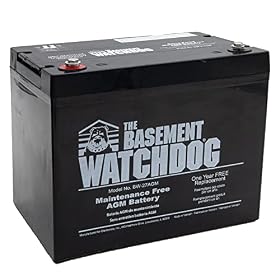
A sump pump backup battery can last anywhere from a few hours to more than a day, but there is no single runtime that applies to every basement. The biggest factors are how often the pump runs, the battery’s usable capacity, the backup pump’s power draw, and the amount of water entering the pit.
A battery-powered backup pump may run for many hours during light inflow because it operates only when the float switch calls for pumping. During heavy rain, a high water table, or a burst water line, the same battery can drain much faster.
A simple way to estimate runtime
For a rough estimate, use this general calculation:
Battery energy in watt-hours = battery voltage × amp-hours
This calculation is only a starting point. Battery capacity is not always fully usable, and the backup system may lose energy through a controller, wiring, or inverter. Follow the backup pump manufacturer’s runtime chart when one is available.
Example calculation
Suppose a battery is labeled 12 volts and 75 amp-hours:
12 volts × 75 amp-hours = 900 nominal watt-hours
A pump drawing 100 watts would theoretically use that energy in about 9 hours of continuous operation
Actual runtime will be lower or otherwise different because of battery condition, discharge limits, system losses, temperature, and the pump’s actual draw
That estimate applies only if the pump runs continuously. If it runs for 10 minutes every hour, the battery’s operating time can be several times longer than its continuous-runtime figure. Do not treat the example as a guarantee for a particular pump or battery.
Product prices and availability are accurate as of the date/time indicated and are subject to change. Any price and availability information displayed on Amazon.com at the time of purchase will apply to the purchase of this product.
The factors that affect backup runtime
How often the pump runs
Pump cycling usually matters more than the battery’s label. A backup pump that runs briefly every few minutes can exhaust a battery quickly, even if each individual cycle is short.
If the backup pump runs constantly, the problem may be water volume rather than battery size. A larger battery may provide more time, but it cannot make an undersized pump handle more water than it is designed to move.
Battery capacity and chemistry
Battery capacity is commonly listed in amp-hours, but the number is not a direct promise of runtime. Capacity depends on the discharge rate, temperature, battery age, and the point at which the backup system shuts down to protect the battery.
Common battery types include:
Flooded deep-cycle lead-acid batteries: Often used with compatible sump pump backup systems, but they may require ventilation and maintenance.
AGM lead-acid batteries: Sealed and generally lower-maintenance, but they still need to match the charger and backup system’s requirements.
Lithium batteries: May offer lower weight and different cycle characteristics, but compatibility, charging requirements, temperature limits, and battery-management electronics are important.
Use only a battery type and capacity approved by the backup pump manufacturer. A car starting battery is generally not the right substitute for a deep-cycle backup battery because it is designed for short bursts rather than repeated discharge.
Pump power draw
A pump that draws more power uses the battery faster. For AC backup pumps, the inverter also consumes energy and may have a maximum output limit. Starting current can be higher than normal running current, so the inverter must be sized for the pump’s startup demand as well as its running wattage.
For DC backup pumps, check the manufacturer’s current draw and runtime chart instead of assuming that two pumps with similar gallons-per-hour ratings use the same amount of power. Head height, discharge-pipe size, and check-valve resistance can affect the load.
Battery age and condition
Lead-acid batteries gradually lose capacity. A battery that once provided a full night of backup may provide much less after repeated deep discharges, poor charging, high heat, freezing conditions, or several years of service.
A battery can show a normal voltage at rest and still have little usable capacity under load. If the system’s alarm indicates a weak battery, the battery fails a manufacturer-approved test, or runtime has noticeably declined, replacement may be more sensible than relying on a voltage reading alone.
Temperature
Very cold conditions can reduce available battery capacity. Excessive heat can also shorten battery life. Keep the battery within the temperature range specified by the battery and backup-system manufacturers, and do not place a battery where it can be submerged or exposed to leaking water.
Product prices and availability are accurate as of the date/time indicated and are subject to change. Any price and availability information displayed on Amazon.com at the time of purchase will apply to the purchase of this product.
How long should a backup battery last?
The honest answer is: long enough to cover the expected outage and water inflow, with a safety margin. Manufacturer charts may list runtime under specific conditions, such as a certain pump, battery size, lift height, and cycling pattern. Those figures are more useful than a general industry estimate, but they still may not match your basement’s water inflow.
For planning purposes, consider three situations:
Short outage and light inflow: A properly sized battery may provide substantial protection if the pump cycles infrequently.
Overnight outage during rain: Runtime may be much shorter than the battery’s light-duty rating suggests. A larger battery, a second backup pump, or a generator may be appropriate.
Long outage or severe flooding risk: Do not rely on one battery alone. Consider a complete backup plan that may include a second pump, a separate power source, high-water alarms, and a generator or other approved backup power system.
Product prices and availability are accurate as of the date/time indicated and are subject to change. Any price and availability information displayed on Amazon.com at the time of purchase will apply to the purchase of this product.
How to get more runtime from the system
Keep the primary sump pump working efficiently
The backup system should not compensate for a failing primary pump. Check that the primary pump starts reliably, the discharge line is clear, and the check valve prevents water from flowing back into the pit.
Backflow can make the pump cycle more often and increase the amount of water that must be removed during each cycle.
Check the discharge line and check valve
A partially blocked discharge line, frozen outlet, damaged pipe, or incorrectly installed check valve can reduce pumping performance. Inspect the outlet outside the home and make sure discharged water is directed away from the foundation.
Turn off power before inspecting or servicing electrical equipment, and follow the manufacturer’s instructions for the check valve and pump assembly.
Use the correct battery and charger
Do not connect a larger or different battery chemistry simply because it has a higher amp-hour label. The charger may not be designed for it, and the backup controller may have voltage, charging, or enclosure requirements.
A larger approved battery can increase runtime. An incompatible battery can create charging, overheating, leakage, or equipment-failure risks.
Keep the pit and float switch clear
Remove debris that could interfere with either pump or its float switch. Make sure the backup pump’s float can rise freely and that cords, pipes, and the basin cover do not restrict movement.
A stuck float can cause continuous operation and drain the battery quickly.
What to do when runtime is much shorter than expected
Check the system in this order:
Inspect the battery condition. Look for an alarm, swelling, leakage, corrosion, loose connections, or an age beyond the manufacturer’s recommended replacement interval. Do not handle a damaged battery; follow the manufacturer’s safety instructions.
Confirm the charger is working. Check the charger indicator and the circuit supplying it. Do not work on exposed electrical wiring unless you are qualified to do so.
Check for excessive cycling. Watch the pump during rain or while adding water to the pit as directed by the manufacturer. Frequent cycles may indicate high inflow, a low float setting, backflow, or a discharge problem.
Inspect the discharge path. Look for blockage, freezing, a failed check valve, or an outlet that allows water to return toward the foundation.
Check the float and pump intake. Debris or a restricted intake can cause poor pumping and longer operation.
Review pump and battery compatibility. Confirm that the battery voltage, chemistry, charger, pump, and controller match the manufacturer’s requirements.
Have the system serviced if the electrical fault remains. If the charger, controller, pump motor, or wiring appears faulty, use a qualified professional or the manufacturer’s service guidance.
When to replace the battery or upgrade the backup system
Replace the battery when it is damaged, will not hold a charge, fails the manufacturer’s test, or no longer provides enough runtime for the conditions around your home. Choose a compatible replacement rather than selecting solely by physical size or amp-hour rating.
A larger battery may be reasonable when the backup pump works correctly but the expected outage lasts longer than the current battery can cover. An additional or higher-capacity backup system may be more appropriate when water inflow is high, the basement is vulnerable to flooding, or outages commonly last for extended periods.
If the backup pump cannot keep up with incoming water even while the battery is charged, focus on pump capacity, discharge design, and a second approved backup method—not just a bigger battery. For homes with significant flood risk, a licensed electrician or qualified sump-pump professional can help design a system with appropriate transfer equipment, alarms, and generator or battery backup.
Bottom line
Backup battery runtime depends on actual pump operation, not just the battery’s amp-hour label. Estimate capacity using voltage and amp-hours, account for system losses, and then compare that estimate with the manufacturer’s runtime data. Keep the primary pump, discharge line, check valve, float, charger, and battery in good condition, and maintain another plan for long outages or unusually heavy water inflow.
FAQ
Can a sump pump backup battery last all night?
It can, if the backup pump cycles infrequently and the battery is properly sized and charged. Heavy rain, high water inflow, an aging battery, or continuous pump operation can reduce runtime to much less than one night.
How do I calculate sump pump battery runtime?
Multiply the battery voltage by its amp-hour rating to estimate nominal watt-hours, then divide by the pump’s wattage. Reduce that theoretical result to account for usable battery capacity, system losses, temperature, battery age, and the pump’s actual duty cycle.
Can I use a car battery for a sump pump backup?
A car battery is generally not a suitable replacement for a deep-cycle battery because it is designed for short starting bursts. Use only a battery type approved by the sump pump backup manufacturer.
Why does my backup battery die quickly during rain?
The pump may be running continuously because of high water inflow, a restricted discharge line, backflow through a failed check valve, an undersized pump, or a weak battery. Check the discharge path, float operation, battery condition, and system compatibility.
Is a larger amp-hour battery always better?
No. A larger battery can provide more runtime only when the backup pump, charger, controller, enclosure, and wiring are designed to support it. Follow the manufacturer’s approved battery specifications.