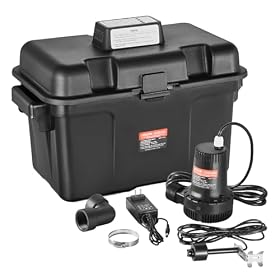
The best battery backup sump pump is one that can handle your discharge height, runs from a suitable deep-cycle battery, and operates independently when the primary pump fails or the power goes out. Use this guide to compare system types and avoid common installation mistakes.
What do you need help with?
Open an answer, or tell us what we should cover next.
Answered in this guide
Choose a battery backup sump pump for your home
Choose a DC battery backup system that matches your discharge height and pipe size, uses a suitable deep-cycle battery, and operates independently when the primary pump fails or power goes out.
Compare battery backup sump pumps by real performance
Compare pumps by flow at your actual lift height, battery runtime, float-switch independence, charger operation, and alarm features instead of maximum advertised flow.
Understand how dedicated DC pumps, combination systems, water-powered backups, and inverter or generator-supported systems differ during outages and primary-pump failures.
Check basin size, pump and float clearance, piping, discharge height, and other installation conditions before buying a backup system or relying on it during an outage.
Requests help us prioritize the next guide. No email required.
One anonymous request per topic.
A battery backup sump pump protects your basement when the main pump fails, the power goes out, or heavy rain overwhelms the primary system. The best choice is usually a complete backup system with enough capacity for your vertical lift, an independent float switch, a reliable charger, and a battery sized for the expected outage—not simply the pump with the highest advertised gallons-per-hour figure.
Quick recommendation
For most homes, choose a DC battery backup sump pump system that:
Is rated for your actual discharge height and pipe size
Uses a dedicated deep-cycle battery rather than a standard automotive battery
Has an independent float switch or water-level sensor
Includes a charger, alarm, check valve, and battery box when possible
Can share the existing discharge line only if the manufacturer permits it
Provides a visible or audible high-water and battery-status warning
If your area experiences long outages, frequent flooding, or unreliable utility service, consider a backup pump with a larger battery system—or a water-powered backup where local plumbing conditions and regulations make that option appropriate.
What to compare before buying
Pumping capacity at your actual head height
Sump pump capacity is commonly listed in gallons per hour or gallons per minute. Those figures can be misleading because output decreases as the pump pushes water higher and through more pipe, fittings, and check valves.
Measure the approximate vertical distance from the pump inlet area to the discharge outlet. This is the static head. Then account for horizontal pipe runs, elbows, and the outlet arrangement. Compare the pump’s performance chart at that height rather than relying on its maximum rating at minimal lift.
A backup pump does not necessarily need to match the primary pump’s capacity, but it must keep up with the inflow your pit can receive during a realistic storm. If the primary pump already struggles during heavy rain, a small backup may provide little protection.
Battery type and runtime
Most battery backup systems require a separate deep-cycle battery. Suitable batteries may include sealed AGM units or other battery types specifically approved by the pump manufacturer. A car battery is generally a poor choice because it is designed for short engine-starting bursts, not repeated discharge and recharge cycles.
Runtime depends on several variables:
Battery capacity and condition
Water inflow into the pit
Pump lift and plumbing resistance
How often the pump cycles
Battery temperature and age
Charger performance
A larger battery can extend runtime, but it does not guarantee protection through an extended outage. For homes with frequent or long outages, look for an alarm or monitoring feature that warns you when the battery is low, the charger fails, or the pump is running continuously.
Float switch independence
A backup pump should have a switch that can operate independently of the primary pump. This helps the backup start when the water rises even if the primary float switch is stuck, the primary pump has failed, or the main pump has lost power.
Check that the float has enough room to move freely inside the basin. Discharge pipes, the primary pump, the basin wall, and electrical cords should not restrict it. A tethered float and a vertical float have different space requirements, so confirm compatibility with your pit before buying.
Charger and alarm features
The charger should be appropriate for the battery type and electrical supply. Useful warning features may include:
High-water alarm
Low-battery warning
Charger-failure warning
Pump-running or pump-failure indicator
Audible alarm with a mute function
Dry-contact or monitoring connection for a home security system
Do not ignore an alarm that repeatedly activates. It can indicate a failed primary pump, a clogged discharge line, a weak battery, a stuck float, or water entering the pit faster than the backup can remove it.
Check valve and discharge plumbing
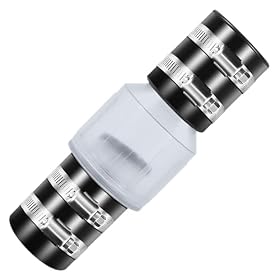
A check valve prevents pumped water from flowing back into the basin after the pump shuts off. Some backup systems include one, while others require you to buy a compatible valve separately.
The valve must match the pipe diameter and installation orientation. An incorrectly installed or failing check valve can cause short cycling, reduce effective capacity, or allow the basin level to rise quickly after each cycle.
If the backup pump connects to the primary pump’s discharge pipe, verify the arrangement in the installation instructions. Poorly configured shared plumbing can allow one pump to push water back through the other or restrict total flow. Separate discharge lines may be preferable when the basin and exterior layout allow them.
Product prices and availability are accurate as of the date/time indicated and are subject to change. Any price and availability information displayed on Amazon.com at the time of purchase will apply to the purchase of this product.
Battery backup sump pump types
Dedicated DC backup pump
A dedicated DC backup pump uses a battery and typically operates separately from the primary AC pump. This is the most common choice for homeowners who want protection during a power outage without replacing a functioning primary pump.
It is a good fit when the existing primary pump is reliable but the home needs an independent emergency pump. Installation usually requires space for the backup pump, battery, charger, and discharge plumbing inside or near the basin.
Combination primary-and-backup system
A combination system includes a primary pump and a backup pump in one package or mounting arrangement. This can simplify a new installation, but confirm that both pumps have independent controls and that the backup will still operate if the primary pump or its switch fails.
For an existing sump system, replacing a working primary pump with a combination package may be unnecessary unless the current pump, basin arrangement, or discharge plumbing also needs an upgrade.
Water-powered backup pump
A water-powered backup pump uses municipal water pressure instead of a battery. It may be useful where electrical outages are common and the home has an appropriate public-water connection.
This option is not suitable for every property. It depends on water pressure, plumbing layout, local rules, and the availability of municipal water during the emergency. It can also increase water use during operation. Follow local plumbing requirements and have the installation completed by a qualified professional when needed.
Inverter or generator-supported backup
A generator or properly sized battery-inverter system can keep the primary AC sump pump operating during an outage. This may be practical if you already need backup power for other critical equipment.
The electrical system must be sized and connected correctly. Never connect a generator to household wiring through an improvised cord or without an approved transfer setup. Have permanent or complex electrical work handled by a qualified electrician.
Product prices and availability are accurate as of the date/time indicated and are subject to change. Any price and availability information displayed on Amazon.com at the time of purchase will apply to the purchase of this product.
Installation details that affect reliability
Before purchasing, check these measurements and conditions:
Basin diameter and depth: The pump, float, and piping must fit without binding.
Discharge pipe size: A reducer or undersized pipe can restrict flow.
Vertical lift: Measure to the discharge outlet, not just to the top of the pit.
Available outlet: The charger and primary pump should use properly grounded circuits as required by their instructions.
Battery location: The battery needs a stable, protected location with suitable ventilation and spill protection according to the battery and pump instructions.
Outdoor discharge: The outlet must direct water away from the foundation and avoid freezing, blockage, or discharge toward a neighbor’s property.
Keep the backup pump’s float away from the primary pump’s float. If the switches activate at nearly the same water level, they may interfere with one another or start together unnecessarily.
Product prices and availability are accurate as of the date/time indicated and are subject to change. Any price and availability information displayed on Amazon.com at the time of purchase will apply to the purchase of this product.
Common buying mistakes
Choosing by maximum gallons per minute
Maximum flow is usually measured under favorable conditions. A pump that looks powerful on paper may deliver much less at your actual lift height. Use the manufacturer’s performance curve whenever it is available.
Buying the battery separately without checking compatibility
Battery voltage, terminal style, physical dimensions, charging requirements, and capacity all matter. Confirm the battery requirements before choosing the pump or battery box.
Treating the backup as a replacement for maintenance
A backup pump does not fix a clogged primary discharge line, damaged check valve, undersized piping, or a basin that fills faster than the system can pump. Inspect the complete system before storm season.
Installing both floats too close together
Crowded basins can cause floats to catch on pipes or cords. Test each switch through a complete cycle after installation and make sure the pump shuts off normally.
Forgetting the discharge outlet
Water pumped outside can return to the foundation if the outlet is too close to the house, blocked by ice, or aimed at an area that slopes back toward the basement. Confirm that the exterior discharge path remains open in bad weather.
Product prices and availability are accurate as of the date/time indicated and are subject to change. Any price and availability information displayed on Amazon.com at the time of purchase will apply to the purchase of this product.
How to test a battery backup sump pump
Test the system after installation and periodically afterward:
Confirm the battery is connected with the correct polarity and that the charger shows normal operation.
Pour water into the basin slowly, or follow the manufacturer’s approved test method.
Verify that the primary pump starts and shuts off normally.
Disconnect utility power only as instructed, then raise the water level enough to activate the backup pump.
Listen for unusual grinding, rattling, or repeated short cycling.
Confirm that water leaves the discharge outlet and does not flow back excessively.
Test the alarm and check for low-battery or charger warnings.
Restore power and verify that the charger resumes normal operation.
Do not handle electrical connections in wet conditions. If a pump trips a breaker, shows damaged wiring, overheats, or operates abnormally, disconnect it safely and follow the manufacturer’s service instructions or contact a qualified professional.
When to replace the backup system
A battery backup pump or its battery may need replacement when it cannot maintain charge, runs much less time than expected, repeatedly triggers low-battery warnings, leaks, fails to start during a water test, or has damaged wiring or housing.
Replace the battery according to its condition and the manufacturer’s guidance rather than waiting for an outage. If the basin is too small, the discharge plumbing is badly restricted, or flooding continues even when both pumps run correctly, replacing only the pump may not solve the problem. The system may need a larger basin, improved discharge piping, a different pump arrangement, or professional evaluation.
FAQ
Is a battery backup sump pump worth it?
It is often worthwhile if a flooded basement could cause significant damage, your primary pump is the only means of drainage, or your home experiences power outages and severe storms. The value depends on the cost of the system compared with the potential damage and the reliability of your existing pump and power supply.
How long will a battery backup sump pump run?
There is no single runtime. It depends on battery capacity, water inflow, pump lift, plumbing resistance, cycling frequency, battery age, and temperature. Use the manufacturer’s runtime information as an estimate and test the system under realistic conditions.
Can a battery backup sump pump use the same discharge pipe as the main pump?
Sometimes, but only when the pump manufacturer allows the configuration and the piping is sized and arranged correctly. A shared line can create backflow or restrict output if installed incorrectly. Separate discharge lines may provide a more reliable arrangement.
What kind of battery does a backup sump pump need?
Use the battery type specified by the pump manufacturer, commonly a compatible deep-cycle battery such as a sealed AGM unit. Do not substitute a standard automotive starting battery unless the manufacturer explicitly approves it.
How often should a sump pump backup battery be checked?
Check the charger indicator, battery connections, alarm, float movement, and discharge outlet several times a year and before major storms. Replace the battery when it no longer holds a dependable charge or when the manufacturer’s service guidance calls for replacement.