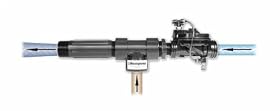
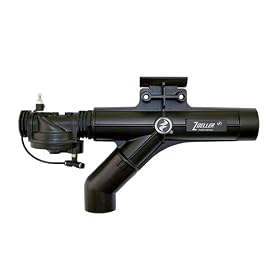
A water-powered backup sump pump can keep removing water during a power outage without batteries, but it only works with an adequate municipal water supply and must be installed correctly to prevent backflow and discharge problems.
A sump pump with a water-powered backup combines an electric primary pump with a backup pump driven by household water pressure. When the power fails, the water-powered unit can continue removing groundwater from the sump basin—provided the home has municipal water service, sufficient pressure, and a properly installed water supply and discharge system.
This setup is most useful where outages are common and you want to avoid maintaining batteries. It is not a universal solution: homes supplied by a private well generally cannot use it during a power outage because the well pump also needs electricity.
How a water-powered backup sump pump works
The backup pump connects to a pressurized municipal water line. When a float or sensor detects rising water, the unit opens a valve. Incoming water passes through an internal ejector, creating suction that pulls sump water out through a separate discharge line.
The water-powered pump does not need electricity or a battery. However, it uses treated household water while operating. Its pumping capacity depends on factors such as:
Available water pressure and flow
The model’s rated performance
Discharge pipe size and length
Vertical lift to the outlet
The number of bends and restrictions in the discharge line
The depth and configuration of the sump basin
Always compare the manufacturer’s performance chart with the actual lift and plumbing conditions at your home. A pump’s advertised capacity at low lift may be substantially different from its capacity at the height where your discharge pipe exits.
When this type of backup makes sense
A water-powered backup is worth considering when most of the following are true:
Your home has reliable municipal water service.
Your water pressure meets the pump manufacturer’s requirements.
Power outages are a realistic flooding risk.
You do not want to maintain or replace a backup battery.
A plumber can access a suitable cold-water supply line.
Local plumbing rules permit the installation.
It can be especially practical in finished basements, vacation properties, or homes where a discharged or neglected battery would be a concern.
Product prices and availability are accurate as of the date/time indicated and are subject to change. Any price and availability information displayed on Amazon.com at the time of purchase will apply to the purchase of this product.
When to choose another backup system
A water-powered backup may be a poor fit if your home uses a private well. During a grid outage, the well pump normally stops, so there may be no water pressure to run the backup sump pump.
It may also be unsuitable when:
Municipal water pressure is below the required range.
The water supply is unreliable during the same storms that cause flooding.
Local regulations restrict the connection or require specific backflow protection.
The pump would consume too much water for your household’s circumstances.
The backup cannot be routed to a suitable discharge point.
In these cases, consider a battery-backup sump pump or a standby generator instead. A battery system requires battery maintenance and eventual replacement, while a generator requires fuel, safe placement, and proper transfer equipment. The best choice depends on your home’s water service, outage pattern, and expected pumping demand.
Product prices and availability are accurate as of the date/time indicated and are subject to change. Any price and availability information displayed on Amazon.com at the time of purchase will apply to the purchase of this product.
What to check before buying
1. Confirm the water supply
Check whether the pump requires a particular minimum water pressure, pipe size, or flow rate. Do not assume that normal faucet pressure is enough. Pressure can vary by neighborhood, well system, municipal demand, and the time of day.
A plumber can verify the available supply and determine whether the proposed connection is acceptable. Do not connect the unit to a line that cannot provide the required flow without checking the manufacturer’s instructions.
2. Verify that backflow protection is included or specified
The backup pump connects to a potable water system, so backflow protection is a critical safety issue. The installation may require an approved backflow preventer or air-gap arrangement, depending on the pump design and local plumbing code.
Use only the protection required by the manufacturer and your local authority. A basic check valve is not automatically a substitute for an approved backflow device.
3. Check the rated pumping performance
Look for performance information at the actual discharge height, not just a maximum gallons-per-minute figure. Compare the rating with the amount of water your primary pump normally handles during heavy rain.
A water-powered unit is usually intended as an emergency backup, not necessarily as an equal-capacity replacement for a high-output primary pump. If groundwater can enter the basin faster than the backup can remove it, the water level may continue rising even while the backup is operating.
4. Plan the discharge route
Many systems use a separate discharge pipe for the backup pump. The outlet must send water far enough away from the foundation and comply with local requirements.
Avoid routing discharge where it can flow back toward the house, freeze, damage landscaping, or connect improperly with another pump’s discharge line. Follow the manufacturer’s instructions for check valves, pipe diameter, and whether the primary and backup lines may share any portion of the route.
5. Confirm basin and float compatibility
The backup pump needs enough room in the sump basin for its pump body, inlet, float or sensor, piping, and service access. Check that the backup activation point is below the basin’s overflow level but above the primary pump’s normal shutoff point.
If the float can catch on the primary pump, its cord, or the basin wall, the backup may not activate when needed. Keep the basin free of gravel, debris, and tangled cords.
Product prices and availability are accurate as of the date/time indicated and are subject to change. Any price and availability information displayed on Amazon.com at the time of purchase will apply to the purchase of this product.
Installation considerations
Because the installation involves potable water, plumbing code, backflow protection, and sump discharge piping, professional installation is often the safest choice. Follow the specific pump instructions rather than copying the layout of another system.
A typical installation includes:
Mounting the backup pump securely in or above the sump basin.
Connecting it to an approved municipal cold-water supply.
Installing the required backflow protection.
Routing a dedicated or approved shared discharge line.
Adding the specified check valve or valves.
Setting the float or sensor so the backup starts before the basin overflows.
Testing the system with the primary pump disabled.
Do not cut into a water line or modify a plumbing system unless you understand the code requirements and the manufacturer’s connection instructions. If the installation requires changes to a main water line, call a licensed plumber.
How to test and maintain the system
Test the backup at least periodically and before the wet season. A practical test sequence is:
Make sure the sump basin has enough water to activate the pump.
Disable the primary pump at its electrical disconnect or by following the manufacturer’s test procedure.
Confirm that the backup starts at the expected water level.
Watch the discharge point to verify that water is leaving the property safely.
Listen for unusual vibration, cycling, leaks, or restriction in the supply line.
Restore the primary pump and confirm that it operates normally.
Never run an electric sump pump dry just to perform a test. Keep the basin, float, supply connection, and discharge outlet clear. Inspect visible plumbing for corrosion, mineral buildup, loose fittings, and leaks.
Water-powered backups do not have batteries, but they are not maintenance-free. The water valve, float, backflow device, supply line, and discharge piping still need inspection. If your area has hard water, ask the manufacturer or plumber whether mineral deposits can affect the valve or ejector.
Troubleshooting common problems
The backup does not start
Check that the basin water level reaches the backup activation point. Then verify that the municipal water supply is on, the isolation valve is open, and the supply line is not kinked or blocked.
If the home has low water pressure, a partially closed valve, or a failed control valve, the pump may not operate correctly. Do not bypass a safety device or backflow preventer. If the supply is available but the valve does not open, professional service may be needed.
The pump runs but removes little water
Confirm that the discharge pipe is not clogged, frozen, crushed, or routed higher than the pump can handle. Check for an incorrectly installed check valve or a restriction caused by too many bends.
Next, compare the actual water pressure and discharge height with the manufacturer’s performance requirements. A pump that works at a short test discharge may not provide enough flow through the finished installation.
Water leaks around the plumbing
Turn off the water supply to the backup system if a connection leaks, and protect the area from water damage. Check fittings for loose connections, damaged threads, or an incorrect seal. Do not continue operating a leaking potable-water connection until it has been repaired.
The primary pump and backup interfere with each other
Inspect the floats, cords, and discharge piping for contact or entanglement. Confirm that check valves are installed in the direction shown by the arrows and that the shared discharge arrangement is permitted by the pump instructions.
If one pump forces water back through the other, the piping layout may be incorrect or a check valve may be missing or failed.
Water-powered backup versus battery backup
Choose a water-powered backup when you have suitable municipal water pressure and prefer not to maintain a battery. Choose a battery backup when your home has a private well, when water pressure is inadequate, or when conserving household water during an outage is a priority.
Some high-risk homes use more than one layer of protection—for example, a primary electric sump pump, a battery backup, and a generator or water-powered unit. That adds cost and installation complexity, so size the system around the actual flood risk and the consequences of a failed pump.
Bottom line
A water-powered backup can be a dependable way to keep a sump basin under control during a power outage, but only when the home has adequate municipal water service and the system is installed with correct backflow protection and discharge plumbing. Before buying, verify water pressure, pumping capacity at your discharge height, basin fit, local code requirements, and whether the backup can handle your expected inflow. For homes on private wells or with inadequate water pressure, a battery backup or generator is usually the more appropriate direction.
FAQ
Does a water-powered sump pump work during a power outage?
Yes, if it is connected to a pressurized municipal water supply. It does not require electricity, but it will not normally work during an outage if the home depends on a well pump that has also lost power.
How much water does a water-powered backup sump pump use?
Water use varies by model, incoming pressure, and pumping conditions. Check the manufacturer’s water-consumption and performance information rather than relying on a general estimate.
Can a water-powered backup sump pump use the same discharge pipe as the primary pump?
Some systems permit a shared discharge arrangement and others require separate piping. Follow the manufacturer’s instructions for check valves, pipe sizing, and connection layout.
Does a water-powered sump pump need a battery?
No. It operates from municipal water pressure, although its valve, float, backflow protection, and discharge system still require periodic inspection.
Is professional installation required?
Requirements vary, but professional installation is strongly advisable because the system connects to potable water and may require approved backflow protection and code-compliant plumbing.