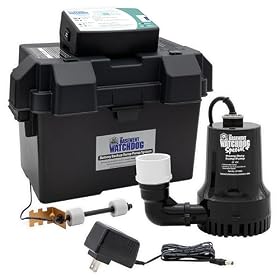
A battery backup sump pump can keep water moving when a storm knocks out power. Learn how to choose the right backup capacity, battery, controls, and discharge setup for your basement.
A battery backup sump pump keeps removing water when a storm causes a power outage or your primary pump fails. The right system should match your sump basin, discharge piping, water inflow, and required pumping height—not just the advertised gallons-per-hour figure.
What a battery backup sump pump does
A backup system normally sits in the same sump basin as the primary pump. When the primary pump loses power, stops working, or cannot keep up with incoming water, a separate DC-powered pump starts using energy stored in a battery.
The backup pump is not a substitute for a properly sized primary pump. It is an emergency layer for outages, pump failure, unusually heavy rain, or a blocked discharge line.
How to choose one for storm outages
Match the pump to the pumping height
Pump capacity decreases as the water must travel higher. The vertical distance from the pump outlet to the discharge point is called the head height. Bends, long pipe runs, narrow pipe, and check valves also add resistance.
Compare systems using performance at your actual head height, not only a maximum flow number with little or no lift. A backup pump that moves substantial water at floor level may deliver much less through a basement discharge line.
Before buying, measure or estimate:
The pump's vertical lift to the discharge outlet
The discharge pipe diameter
The approximate length of the pipe
The number of elbows and fittings
Whether the line exits above ground or connects to another drain system
Use the manufacturer's pump curve or capacity chart when available. If your basement takes on water quickly, choose a system with enough capacity to keep up with the inflow at the actual head height.
Choose the battery separately from the pump
Many backup sump systems require a separate battery. Verify the required battery type, voltage, terminal arrangement, and enclosure before purchasing.
Common choices include:
Flooded lead-acid deep-cycle batteries: Often widely available, but they may require ventilation, fluid-level checks, and careful placement.
Maintenance-free AGM batteries: Sealed and convenient for indoor installations, though they still need the correct charger and suitable operating conditions.
Other sealed battery designs: These can reduce maintenance, but compatibility and charging requirements vary by system.
Do not use a standard automotive starting battery unless the manufacturer specifically permits it. Starting batteries are designed for short bursts of power rather than repeated, extended discharge cycles.
Battery capacity affects how long the backup can operate. Runtime depends on pump load, water level, cycling frequency, battery condition, temperature, and the height and resistance of the discharge line. A larger battery does not automatically solve an undersized or poorly installed pump.
Look for a real power-failure alarm
An audible alarm can warn you that the home is running on backup power, the battery is low, or the water level is too high. This matters because an outage may occur while you are asleep or away from the basement.
Useful warning features may include:
High-water alarm
Low-battery warning
Charger or system-fault indicator
Audible alarm silence button
Remote notification capability, if supported
Check how the alarm is powered and whether silencing it stops only the sound or also disables the warning condition. Follow the instructions for placing the alarm where it can be heard.
Confirm compatibility with your existing sump basin
The backup pump must physically fit inside the basin without interfering with the primary pump or its float switch. Measure the basin's inside diameter and depth, then compare those dimensions with the installation requirements.
Also check:
Whether the system uses a separate discharge pipe or shares the primary line
Whether the intake can remain below the intended activation level
Whether the float can move freely
Whether the basin cover has openings for the pipes and wiring
Whether the installation leaves room to remove either pump for service
A separate discharge line is often preferable because a shared line can restrict flow and adds more components that could affect both pumps. Use the arrangement specified by the backup pump manufacturer.
Product prices and availability are accurate as of the date/time indicated and are subject to change. Any price and availability information displayed on Amazon.com at the time of purchase will apply to the purchase of this product.
Installation considerations
Installation varies by system, but the general setup includes securing the backup pump, routing the discharge pipe, installing a check valve where specified, connecting the battery, and plugging in the charger or controller.
Important points include:
Keep the battery upright and in an appropriate battery box or enclosure.
Provide the ventilation required for the battery type.
Keep electrical connections dry and above possible floodwater.
Support discharge piping so its weight is not carried by the pump.
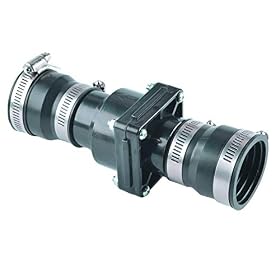
Make sure every check valve points in the direction of discharge flow.
Avoid sharp bends and unnecessary restrictions.
Route the outdoor discharge far enough from the foundation to prevent water from returning.
Do not connect equipment in a way that conflicts with local plumbing or electrical requirements.
Disconnect power before servicing the pump or changing wiring. Battery terminals can deliver high current even when household power is off. If the installation requires new electrical circuits, complex wiring, or changes to the home's drainage system, use a qualified professional and follow local code and manufacturer instructions.
Product prices and availability are accurate as of the date/time indicated and are subject to change. Any price and availability information displayed on Amazon.com at the time of purchase will apply to the purchase of this product.
Test the backup before the next storm
A backup pump should not be considered ready just because its charger is plugged in. Perform a controlled test according to the manufacturer's instructions:
Confirm that the battery is connected and the charger indicates normal operation.
Check that the primary pump is stable and not blocking the backup float or sensor.
Add water to the basin gradually, or use the system's approved test procedure.
Verify that the backup starts at the expected water level.
Listen for unusual grinding, rattling, or repeated cycling.
Confirm that water exits through the intended discharge route.
Test the high-water and power-failure alarms.
Restore normal power and verify that the charger returns to its normal state.
Do not repeatedly run a pump dry unless the instructions specifically allow it. Never disconnect a pump or household circuit in a wet area if doing so could expose you to electrical hazards.
Product prices and availability are accurate as of the date/time indicated and are subject to change. Any price and availability information displayed on Amazon.com at the time of purchase will apply to the purchase of this product.
Maintenance checklist
Inspect the system several times a year and before seasons with heavy rain. Maintenance commonly includes:
Checking battery terminals and cables for corrosion or looseness
Confirming the charger or controller shows normal status
Testing the pump and alarm
Looking for sediment, debris, or ice in the discharge line
Checking the check valve for proper flow and leakage
Confirming the basin is free of objects that could block the float
Inspecting pipe joints for leaks
Checking the battery according to its design and the manufacturer's schedule
Replace the battery when it cannot hold a charge, reaches the manufacturer's service limit, swells, leaks, or shows other damage. A damaged battery should be handled according to local disposal guidance.
Product prices and availability are accurate as of the date/time indicated and are subject to change. Any price and availability information displayed on Amazon.com at the time of purchase will apply to the purchase of this product.
When a battery backup is not enough
A battery system may not be sufficient if your home experiences long outages, the sump receives a very high volume of water, or the discharge route is vulnerable to freezing or blockage. In those conditions, consider a larger-capacity backup setup, a second backup pump, a generator-compatible primary system, or another professionally designed water-management solution.
A generator can provide longer runtime, but it requires safe outdoor placement, proper transfer equipment where applicable, fuel planning, and compliance with electrical safety requirements. Never operate a fuel-burning generator indoors, in a garage, or near doors and windows.
When to replace the system
Replace the backup pump if its motor repeatedly fails to start, its housing is cracked, the float or sensor cannot be made reliable, or it cannot meet the required flow at your actual head height. Replace the battery when it no longer provides dependable runtime or shows physical damage.
If the basin, discharge pipe, or primary pump is also unreliable, replacing only the battery backup may leave the larger problem unresolved. A plumber or qualified sump-pump installer can help evaluate inflow, head height, discharge routing, and code requirements before the next major storm.
FAQ
Does a battery backup sump pump work when the power is out?
Yes. A battery backup sump pump uses stored energy rather than household power. Its operating time depends on battery capacity, pump load, water inflow, cycling frequency, and the height and resistance of the discharge line.
What type of battery is best for a backup sump pump?
Use the battery type specified by the backup pump manufacturer. Deep-cycle flooded lead-acid and sealed AGM batteries are common options, but voltage, charger compatibility, capacity, ventilation, and maintenance requirements vary.
Can a backup sump pump share the primary pump's discharge pipe?
Some systems allow a shared discharge line, while others require a separate line. Follow the manufacturer's plumbing arrangement. A separate line can reduce interference between pumps, but available space and local installation requirements also matter.
How long will a battery backup sump pump run?
There is no universal runtime. It varies with battery condition and capacity, pump output, head height, water inflow, and how often the pump cycles. Use the manufacturer's runtime information for conditions that resemble your installation.
Should I buy a battery backup sump pump if I already have a generator?
A battery backup can provide automatic protection while a generator is starting, unavailable, or out of fuel. A generator may support longer operation, but it requires safe placement and properly installed electrical equipment. The two systems can serve different roles.