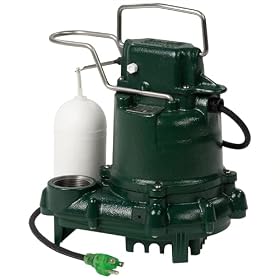
Cast iron and plastic impellers can both work well in sump pumps. The better choice depends on water quality, debris, corrosion risk, pump design, and how often the pump operates—not impeller material alone.
Cast iron and plastic impellers can both be good choices for a sump pump. Cast iron is heavier and generally more resistant to some wear, while plastic resists rust and keeps the pump lighter. However, impeller shape, clearances, motor quality, screen design, and the pump’s intended use often matter as much as the material.
For most residential sump pits with relatively clean groundwater, a properly designed plastic impeller is usually adequate. A cast iron impeller may make more sense in demanding installations with frequent operation or abrasive sediment, provided the rest of the pump is designed for that service.
Cast iron versus plastic at a glance
Consideration
Cast iron impeller
Plastic impeller
Corrosion resistance
Can rust if its coating or finish is damaged
Does not rust, although other pump parts can corrode
Weight
Heavier
Lighter
Wear resistance
Often a strong choice where abrasive sediment is present
Can work well with normal sump water; suitability depends on the plastic and design
Debris handling
Depends mainly on impeller passages and pump design
Depends mainly on impeller passages and pump design
Maintenance concerns
Inspect for rust, chipped coating, or binding
Inspect for cracks, distortion, or damage
Cost and installation
May contribute to a heavier, more substantial pump
May help keep the pump lighter and easier to handle
These are general tendencies, not guarantees. Check the manufacturer’s specifications for the complete pump rather than assuming the impeller material determines performance by itself.
When a cast iron impeller makes sense
A cast iron impeller can be useful when a sump pump operates frequently or moves water containing fine abrasive sediment. The material is substantial and may tolerate certain wear conditions better than a lightweight component.
Consider cast iron when:
The pump runs often during wet seasons.
The pit contains noticeable sand or sediment.
The pump is part of a higher-duty installation.
The added weight is not a problem during installation or removal.
The manufacturer specifically rates the pump for abrasive or demanding sump conditions.
Cast iron is not automatically better for every basement. If the pump is exposed to corrosive water and its protective finish is damaged, rust can become a concern. Rust buildup can contribute to a sticking or poorly balanced impeller, reducing performance or causing noise.
Product prices and availability are accurate as of the date/time indicated and are subject to change. Any price and availability information displayed on Amazon.com at the time of purchase will apply to the purchase of this product.
When a plastic impeller makes sense
Plastic impellers are common in residential sump pumps because they are light and naturally resistant to rust. They can be a practical choice for groundwater that is not heavily contaminated with sand, gravel, or other abrasive material.
Consider plastic when:
The sump water is relatively clean.
Corrosion resistance is a priority.
You want a lighter pump that is easier to install or service.
The manufacturer provides the required flow and head performance.
The pump is intended for ordinary residential sump duty.
Plastic does not mean fragile by definition. Different pumps use different plastics, designs, and reinforcement methods. Avoid comparing material names without also checking the pump’s rated capacity, maximum head, switch design, and debris-handling instructions.
Product prices and availability are accurate as of the date/time indicated and are subject to change. Any price and availability information displayed on Amazon.com at the time of purchase will apply to the purchase of this product.
The impeller material is only one part of the decision
Impeller design and clearance
A well-designed impeller with appropriate clearances can outperform a pump with a more durable material but a poor design. Look for the manufacturer’s information about solids handling, recommended water conditions, and whether the pump is intended for clean water or sediment-prone sump pits.
Do not assume a pump can pass large debris just because it has a cast iron impeller. The pump inlet, volute, screen, and discharge passage can still clog.
Pump body and impeller are different specifications
Some sump pumps have cast iron housings but plastic impellers, or plastic and composite housings with metal internal parts. Product descriptions sometimes emphasize a cast iron body without clearly identifying the impeller material.
If impeller material is important to your decision, confirm it in the manufacturer’s documentation. A cast iron housing does not necessarily mean the impeller is cast iron.
Head height and discharge size
A pump must move water from the basin through the vertical lift and discharge piping. Compare its rated flow at the required head, not only its advertised flow at minimal lift. Also verify that the discharge outlet matches your check valve and piping.
A durable impeller cannot compensate for an undersized pump, excessive lift, a restricted discharge line, or a clogged check valve.
Switch reliability
For flood prevention, the float switch or sensor is critical. A pump with a strong impeller can still fail if the switch sticks, the cord tangles, or the basin does not provide enough room for the float to move freely.
Product prices and availability are accurate as of the date/time indicated and are subject to change. Any price and availability information displayed on Amazon.com at the time of purchase will apply to the purchase of this product.
Which impeller is better for sediment?
Cast iron is often the more conservative choice when fine sediment is unavoidable, but the pump must be rated for that condition. Sediment can wear moving parts, clog passages, and settle in the basin regardless of impeller material.
If your pit contains sand or grit:
Inspect the basin and remove loose debris while the pump is disconnected from power.
Check whether the pump’s manual permits sediment or abrasive water.
Keep the pump upright on a stable stand or manufacturer-approved base if required.
Make sure the intake screen and discharge line are clear.
Consider improving drainage around the foundation if sediment continually enters the pit.
Do not use a standard sump pump to handle sewage, wastewater, solvents, or liquids outside its rated application.
Which is better for corrosion?
Plastic has an advantage against rust at the impeller itself. This can matter in a damp, chemically aggressive, or mineral-heavy environment. However, the motor housing, fasteners, shaft, bearings, and other internal components may still corrode.
If corrosion is a recurring problem, inspect the entire pump construction and ask the manufacturer what water conditions are acceptable. Replacing only the impeller may not solve failures caused by corrosion elsewhere in the pump.
What to check before buying
Use this checklist instead of choosing by impeller material alone:
Required pumping height from the basin to the discharge outlet
Flow rate at that height
Discharge outlet size and compatible check valve
Maximum solids or debris size, if listed
Automatic switch type and minimum water level
Basin diameter and available float clearance
Pump body and impeller materials, listed separately
Manufacturer guidance for sediment, grit, and continuous operation
Availability of a compatible replacement pump or service parts
Electrical requirements and the condition of the grounded outlet or GFCI protection
Unplug the pump before handling it, and follow the manufacturer’s installation instructions. Have a qualified electrician inspect unsafe wiring, repeated breaker trips, damaged cords, or electrical connections exposed to water.
Bottom line
Choose a cast iron impeller when the manufacturer rates the pump for frequent operation or abrasive sediment and the added weight and possible rust exposure are acceptable. Choose a plastic impeller when you want a lighter, corrosion-resistant pump for ordinary residential sump water.
For either material, prioritize the pump’s flow at your actual head height, switch reliability, clog resistance, construction quality, and suitability for your water conditions. If the existing pump has a damaged impeller, replacement is reasonable only when the manufacturer offers a compatible service part and the motor, housing, shaft, and switch are otherwise in good condition. For an older or repeatedly failing pump, replacing the complete unit is often the more dependable choice.
FAQ
Is a cast iron impeller better than a plastic impeller in a sump pump?
Not always. Cast iron may be preferable for frequent operation or abrasive sediment, while plastic offers rust resistance and lower weight. Pump design, rated performance, switch reliability, and water conditions are equally important.
Can a plastic impeller handle sand in a sump pit?
It depends on the pump’s design and manufacturer rating. Some plastic impellers can tolerate ordinary sediment, but continuous sand or grit can wear components and clog passages. Check the manual before using the pump in a sediment-heavy pit.
Does a cast iron sump pump always have a cast iron impeller?
No. A pump may have a cast iron housing with a plastic or composite impeller. Check the manufacturer’s specifications for the impeller and housing separately.
Can I replace only the impeller in a sump pump?
Only if the manufacturer provides a compatible replacement part and the pump is designed to be serviced. If the motor, shaft, housing, bearings, or switch also show wear, replacing the complete pump is usually more practical.
What matters more than impeller material when choosing a sump pump?
Compare flow at the required vertical lift, discharge size, solids-handling guidance, switch design, basin fit, electrical requirements, and the pump’s suitability for your water conditions.