A dirty-water utility pump can sometimes keep a flooded sump pit under control overnight, but it is usually an emergency substitute—not a direct replacement for an automatic sump pump. Before relying on it, confirm that the pump is rated for continuous or unattended operation, can handle the water and debris, reaches the required discharge height, and is protected by a properly installed GFCI outlet. If it requires manual switching or frequent supervision, do not treat it as a leave-it-and-forget-it solution.
Comparisons · Mon Sep 07
Can a dirty-water utility pump replace a failed sump overnight
A dirty-water utility pump may keep a basement dry during an emergency, but only if it can handle the water, lift height, discharge setup, and supervision requirements. Here is how to use one safely as a temporary substitute.
What do you need help with?
Open an answer, or tell us what we should cover next.
Answered in this guide
Use a dirty-water pump as a temporary sump backup
A submersible dirty-water utility pump can provide short-term emergency drainage when it fits the sump or flooded area and has enough capacity to overcome the vertical lift and discharge resistance.
Understand why a utility pump cannot replace a sump pump long term
A utility pump may lack automatic operation, sufficient lift or flow, debris tolerance, and safe dry-run limits. A true sump pump is built for unattended operation with a basin and discharge system.
Set up a temporary pump safely overnight
If water does not fall or the pump cycles, inspect the intake, hose, outlet adapter, valve, discharge height, airlock, impeller, float, and GFCI connection for common setup problems.
Know when to stop relying on a temporary pump
Buy a proper replacement sump pump as soon as practical when the home needs unattended protection or the utility pump lacks dependable automatic control and other features required for continuous sump service.
Need something else?
Request a topic and help us choose what to build next.
Keep a sump pump running during a power outage
Maintain a sump pump to prevent future failures
Requests help us prioritize the next guide. No email required.
One anonymous request per topic.
When a utility pump can work temporarily
A submersible dirty-water utility pump can be reasonable for short-term emergency drainage when:
- The pump fits securely in the sump basin or flooded area.
- Its maximum head exceeds the vertical rise and discharge-system resistance.
- Its intake can handle the water and the amount of debris present.
- The power cord and connection can remain safely above standing water.
- Someone can check the pump regularly if it does not have a reliable automatic float.
- The pump is approved by its manufacturer for the intended duty cycle.
This arrangement may buy time while you obtain a replacement sump pump. It is especially useful when the original pump has failed mechanically but the basin, discharge pipe, and electrical supply are still usable.
Emergency dirty-water pump
 Green Expert 1.5HP Submersible Sump Pump Kit with 25 ft Lay-Flat Discharge Hose, 6000 GPH…G green EXPERT
$129.99 as of
View on Amazon ZHIKMIAO 1.5HP Sump Pump, 4000GPH High Flow Clean&Dirty Water PumpZHIKMIAO
$79.99 as of
View on Amazon Water Pump Submersible Pump DC 12V Sump Pump 1500 GPH Utility Pump BlackFLOWPAC
$64.99 as of
View on Amazon
Product prices and availability are accurate as of the date/time indicated and are subject to change. Any price and availability information displayed on Amazon.com at the time of purchase will apply to the purchase of this product.
Why it is not always a true sump-pump replacement
A primary sump pump is designed to start automatically as the water rises and to work with a sump basin and discharge system. Many utility pumps are designed for draining pools, pits, appliances, construction areas, or other locations where a person is expected to operate or monitor the pump.
Automatic operation
A utility pump with no float switch will not start when water rises. Someone must turn it on, and the pump may need to be turned off before the basin runs dry. A pump with an attached float may still need more room than a sump basin provides, and the float can catch on the basin wall, discharge pipe, or power cord.
Do not assume that a separate float switch makes any pump suitable for unattended sump service. Check the pump and switch instructions for compatibility, minimum water level, operating position, and approved use.
Lift height and flow
A pump's advertised flow rate is normally measured under ideal conditions. Flow decreases as the discharge must push water higher, travel farther, pass through a check valve, or move through a narrow or restrictive hose.
Measure or estimate:
- The vertical distance from the pump intake to the discharge outlet.
- The horizontal hose or pipe distance.
- The number of bends, adapters, and valves.
- Whether the outlet drains freely away from the foundation.
Compare this setup with the pump's performance chart, not just its maximum gallons-per-minute figure. The pump must move water out faster than groundwater is entering the basin during the storm.
Debris handling
“Dirty water” does not mean every utility pump can pass large solids. Check the specified solids-handling capability and keep the intake away from mud, gravel, leaves, and loose debris. Never remove an intake screen unless the manufacturer specifically permits it.
A pump that repeatedly clogs can leave the basement unprotected even though its motor is still running.
Dry-run limits
Many submersible pumps use the surrounding water for cooling or are not intended to run dry. If the utility pump does not have a dependable shutoff, monitor the water level and follow the manufacturer's minimum-water and maximum-run instructions.
Replacement primary pump
 FLUENTPOWER Vertical Mechanical Float Switch, Universal Float Switch Replacement with 120V Piggyback Plug for Submersible…FLUENTPOWER
$35.99 as of
View on Amazon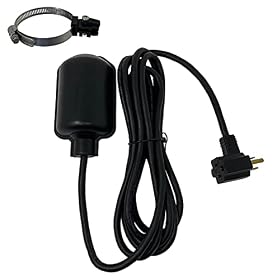 PumpSpy Sump Pump Tethered Universal Float Switch Replacement with Piggyback Plug for Sewage, Reliable Water…PumpSpy
$32.99 as of
View on Amazon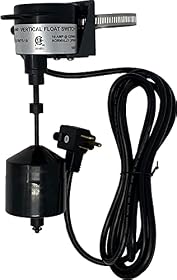 PumpSpy Vertical Float Switch for Sump Pumps – Universal Pump Switch Replacement with 10 ft…PumpSpy
$32.99 as of
View on Amazon
Product prices and availability are accurate as of the date/time indicated and are subject to change. Any price and availability information displayed on Amazon.com at the time of purchase will apply to the purchase of this product.
How to set up a utility pump for emergency use
1. Disconnect power before handling the pump
Keep the pump unplugged while positioning it, clearing the intake, connecting the hose, or adjusting the float. Use a GFCI-protected outlet. Keep plugs, couplers, and extension-cord connections above the water and away from the basin.
Do not use damaged cords or make temporary electrical connections in a wet area. If the outlet, wiring, or grounding is questionable, stop and have a qualified electrician evaluate it.
2. Position the pump correctly
Place the pump upright on a stable, relatively flat surface. Keep it away from loose sediment and make sure the intake is not pressed against the bottom or blocked by the basin wall.
Secure the discharge hose or pipe so pump vibration cannot pull it out of the basin. Do not support the pump by its power cord.
3. Connect a suitable discharge line
Use a hose or pipe that matches the pump outlet and is rated for the pressure and intended use. A loose or undersized connection can leak heavily or restrict flow. Route the outlet far enough from the foundation that discharged water cannot return to the sump or seep back toward the basement.
If connecting to an existing sump discharge pipe, confirm that the connection is watertight and that the pipe does not create excessive restriction. A check valve may be useful in a permanent sump installation, but it must be correctly sized and installed in the proper flow direction.
4. Test the complete setup
Add water to the basin and confirm that:
- The pump starts if an automatic switch is fitted.
- The float moves freely through its full range.
- Water exits at the intended location.
- The discharge line does not kink or collapse.
- The pump does not vibrate, tip, or pull on the cord.
- The pump stops at a safe water level.
- Water does not flow back rapidly when the pump stops.
Watch at least one complete pumping cycle. A pump that runs well with a short hose may perform poorly after being connected to a long, high discharge route.
Temporary discharge hose
 Red Lion RL-SPDK Sump Pump Discharge Hose Kit, Fits 1-1/4" and 1-1/2" FNPT Discharge, 24-Feet…Red Lion
$33.17 as of
View on Amazon Superior Pump 99621 Lay-Flat Discharge Hose Kit, 1-1/2-Inch by 25-Foot PVC Hose, with AdaptersSuperior Pump
$27.99 as of
View on Amazon Flotec FP0012-6U-P2 Universal Discharge Hose Kit, 24-Feet by 1-1/4-Inch or 1-1/2-InchFlotec
$30.96 as of
View on Amazon
Product prices and availability are accurate as of the date/time indicated and are subject to change. Any price and availability information displayed on Amazon.com at the time of purchase will apply to the purchase of this product.
Common problems during an overnight emergency setup
The pump runs but the water level does not fall
Check for a blocked intake, kinked hose, loose outlet adapter, closed valve, or discharge outlet that is higher than the pump can handle. Confirm that the pump is not airlocked and that the impeller is not packed with debris, following the manufacturer's cleaning instructions.
If the pump's actual flow is lower than the incoming water, it cannot protect the basin during the storm. A larger-capacity pump with adequate head may be necessary.
The pump cycles too often
Frequent cycling may indicate a small basin, a leaking check valve, a float that is positioned too close to its shutoff point, or discharge water flowing back into the pit. Short cycling can overheat or wear a pump, so correct the cause rather than simply leaving it running.
The float will not move freely
Reposition the pump, hose, and cord so the float has clear space. Some basins are too narrow for a utility-pump float to operate reliably. In that situation, manual monitoring may be safer than assuming the float will work unattended.
The GFCI trips
Unplug the pump and inspect the cord, plug, outlet, and connection area for moisture or damage. Do not repeatedly reset a tripping GFCI. If the pump or wiring is wet, damaged, or continues to trip the circuit, discontinue use and contact a qualified professional.
Sump pump check valve
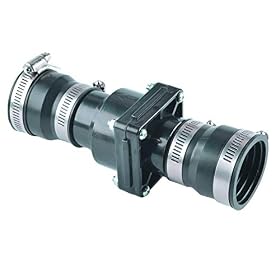 Hydro Master Plastic Sump Pump Check Valve with Stainless Steel Clamps for 1-1/2 inch or…HYDRO MASTER
$15.99 as of
View on Amazon Little Giant CV-10 Check Valve for the following Little Giant Series Condensate Pumps - VCC,…Little Giant
$8.27 as of
View on Amazon Threlaco 2 Pack Sump Pump Check Valve Fit 1-1/2 inch and 1-1/4 inch PipeThrelaco
$22.99 as of
View on Amazon
Product prices and availability are accurate as of the date/time indicated and are subject to change. Any price and availability information displayed on Amazon.com at the time of purchase will apply to the purchase of this product.
When to buy a replacement sump pump instead
Use a proper replacement sump pump as soon as practical when the system must protect the home without supervision. A replacement is the better choice if:
- The utility pump has no dependable automatic control.
- The basin fills faster than the temporary pump can drain it.
- The discharge height exceeds the utility pump's rated capability.
- The pump clogs with the debris in the pit.
- The utility pump is not rated for the required run time.
- The electrical setup cannot be made safe.
- The failed pump was part of a backup or alarm system that the utility pump cannot support.
If the sump pit contains heavy sediment or the pump failed repeatedly, clean the basin and inspect the discharge line before installing the replacement. Replace a damaged check valve or stuck float switch rather than assuming the motor is the only problem.
Bottom line
A dirty-water utility pump can provide short-term emergency drainage overnight, but it should be treated as a temporary measure unless its automatic controls, duty rating, debris capacity, electrical protection, and discharge performance are all appropriate. Monitor a manually controlled setup, keep every electrical connection dry, and replace the failed sump pump promptly if the home needs reliable unattended protection.
FAQ
Can I leave a dirty-water utility pump running overnight?
Only if the manufacturer allows the required run time and the pump has reliable automatic protection against unsafe operation. A manually controlled pump should be monitored because it may run dry, clog, overheat, or fail without starting again.
Will a utility pump fit in a sump pit?
It may, but the basin must provide enough room for the pump and any float switch to operate without catching on the walls, piping, hose, or cord. Confirm the pump's minimum operating water level and dimensions before relying on it.
Do I need a check valve with a temporary utility pump?
A check valve can reduce water returning through the discharge line, but it must be correctly sized and installed in the proper direction. A restrictive, stuck, or incorrectly installed valve can reduce flow or prevent pumping.
Can a dirty-water utility pump handle mud and debris?
Only within its specified solids-handling limits. “Dirty water” is not a guarantee that the pump can pass gravel, leaves, heavy sediment, or large solids. Keep the intake clear and follow the manufacturer's cleaning instructions.
What should I do if the temporary pump cannot keep up?
Turn off unsafe equipment, check for a clogged intake or restricted discharge, and verify the lift height. If the incoming water still exceeds the pump's capacity, use a properly sized replacement or backup sump pump and contact a qualified professional if flooding or electrical hazards are present.