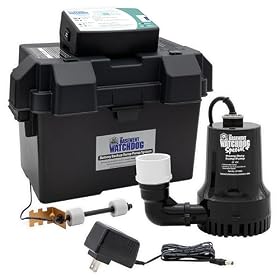
Best sump pump for clay soil that dumps water fast
Clay soil can send water into a sump basin quickly, but the best pump depends on inflow, vertical lift, discharge piping, and clog resistance—not the highest advertised gallons-per-hour number alone.
Clay soil does not usually require a special type of sump pump, but it can contribute to fast groundwater runoff and fine sediment entering the pit. The best choice is a primary sump pump that maintains strong flow at your actual discharge height, tolerates occasional sediment, and is installed with a properly sized discharge line and check valve. If flooding would cause serious damage, add a battery or water-powered backup rather than relying on a larger primary pump alone.
What matters most for clay soil
Flow at the actual lift height
Sump pump capacity is commonly advertised in gallons per hour or gallons per minute, but the useful number is the flow at your system’s total dynamic head. That includes:
The vertical distance from the pump outlet to the discharge point
Friction from long or narrow pipe runs
Elbows, adapters, and the check valve
Any uphill section beyond the foundation wall
A pump that moves a large volume with almost no lift may deliver much less water once it has to push water several feet upward and through a long discharge line. Compare manufacturer flow charts at your estimated lift height instead of choosing by horsepower or the maximum advertised flow alone.
For a clay-soil installation, measure the approximate vertical lift and note the pipe diameter and discharge length before shopping. If the pump cannot keep up with incoming water during heavy rain, a higher-capacity pump, a larger discharge path, or a second pumping system may be needed.
Sediment and clog resistance
Clay can enter a basin as fine sediment, especially when the pit is open to surrounding soil or the drainage system is not properly filtered. Fine material can settle around the pump intake, interfere with a float, or contribute to impeller wear.
Look for a pump design whose manual permits the type and amount of solids expected in your basin. Do not assume that a “high-output” pump is automatically a solids-handling pump. A pump intended only for relatively clean sump water may not be appropriate if the basin regularly receives sand, gravel, or heavy sediment.
Keep the basin covered when possible. A tight-fitting cover helps limit dirt and debris, reduces humidity, and prevents objects from falling into the pit.
How to choose the right primary pump
Match pump capacity to inflow, not just soil type
Clay soil is a clue that runoff may be rapid, but it does not tell you the required pump size by itself. The needed capacity depends on:
How quickly water enters the basin during a storm
The basin’s size and depth
The groundwater level around the foundation
The discharge height and pipe layout
Whether foundation drains, downspouts, or other sources feed the basin
If the existing pump runs almost continuously during storms but still keeps the water level safely below the inlet, the system may be operating normally. If the water rises toward the top, the pump starts and stops rapidly, or the discharge backs up, investigate the system before simply buying a larger pump.
Prefer a durable float arrangement
The float must move freely as the water rises. A tethered float needs room inside the basin and can catch on the pump, piping, or cover. A vertical float may fit better in a narrow pit, but its operating range is limited by the pump design.
Choose a float arrangement that fits the basin without rubbing against the walls or other equipment. A pump that is powerful enough on paper can still fail to protect the basement if its float sticks in the off position.
Check the discharge connection and pipe size
A restrictive discharge line wastes pumping capacity and can increase the time needed to lower the water level. Use the discharge diameter and fittings specified by the pump manufacturer. Avoid reducing the outlet unnecessarily, and keep the route as short and direct as practical.
The discharge must carry water well away from the foundation and should not drain beside the house, where it can seep back through clay soil. Follow local requirements for discharge location, backflow prevention, and connections to drainage systems.
Install a check valve
A check valve prevents water in the discharge pipe from flowing back into the basin when the pump stops. Without one, the pump may repeatedly lift the same column of water, causing unnecessary cycling and reducing effective drainage.
Use a valve compatible with the pump and pipe diameter, install it in the direction shown by its flow arrow, and leave access for cleaning or replacement. A check valve is not a substitute for a properly routed discharge line; it only prevents backflow through the pipe.
Product prices and availability are accurate as of the date/time indicated and are subject to change. Any price and availability information displayed on Amazon.com at the time of purchase will apply to the purchase of this product.
When a backup pump is worth adding
A fast primary pump cannot operate during a power outage unless it has a suitable power source. Clay-heavy sites can be especially vulnerable during storms, when the power may fail at the same time that water inflow increases.
Consider a backup system if the basement contains finished living space, a failed pump could cause major damage, the property has frequent outages, or the primary pump runs heavily during storms. Options include:
A battery backup pump with a separate pump and float
A combination primary-and-backup system
A water-powered backup where local water pressure, plumbing rules, and manufacturer requirements make it suitable
A standby generator that can safely support the sump pump circuit
A backup pump should be independently able to move water through the discharge system. Verify battery type, expected runtime, charging requirements, alarm functions, and the backup pump’s flow at the required lift height. Test the complete system periodically rather than waiting for a storm.
Product prices and availability are accurate as of the date/time indicated and are subject to change. Any price and availability information displayed on Amazon.com at the time of purchase will apply to the purchase of this product.
Installation details that affect performance
Use a stable, clean basin
The pump should stand upright on a stable base and should not sit directly in loose mud or heavy sediment. Do not place rocks, bricks, or improvised supports under the pump unless the manufacturer specifically permits them; loose objects can block the intake or damage the pump.
The basin should be large enough for the pump and float to operate without interference. If water enters faster than the pump can remove it, increasing basin volume may provide more cycling time, but it does not replace adequate pumping capacity.
Keep the pump vertical
A tilted pump can interfere with float movement and may place stress on the discharge connection. Secure the discharge piping so it does not pull the pump sideways or transmit vibration into the basin.
Keep outdoor discharge from returning
Extend the discharge far enough from the foundation to prevent water from draining back toward the sump. In clay soil, water may move slowly through the ground, so discharging only a short distance from the wall can recreate the problem you are trying to solve.
Protect the outlet from freezing, crushing, and blockage. A frozen or obstructed discharge can make even a correctly sized pump appear to have failed.
Product prices and availability are accurate as of the date/time indicated and are subject to change. Any price and availability information displayed on Amazon.com at the time of purchase will apply to the purchase of this product.
A practical buying checklist
Before selecting a pump, gather these details:
Estimated inflow: How quickly does the basin rise during heavy rain?
Total lift: How many feet must the pump raise water before it reaches the outlet?
Pipe layout: What diameter, length, elbows, and check valve are involved?
Basin size: Will the float move freely without touching the walls or piping?
Water quality: Is the basin mostly clear water, or does it receive sand and sediment?
Power reliability: Is a backup pump, battery, generator, or alarm necessary?
Discharge location: Will the water remain away from the foundation and comply with local rules?
If the manufacturer does not provide flow information at your required lift height, comparison is difficult. Treat maximum flow claims without a corresponding head rating cautiously.
If the pump still cannot keep up
First confirm that the intake is clear, the float moves freely, the discharge pipe is open, and the check valve is installed correctly. Then inspect for a partially blocked outlet, a frozen discharge, a loose fitting, or water returning through the pipe after shutdown.
If the pump runs continuously while the water level continues rising, shut off power before handling the equipment and keep people away from standing water near electrical connections. A qualified professional should evaluate unsafe wiring, a flooded electrical area, unusual pump noise, or a basin that is filling faster than the system can handle.
A replacement pump is reasonable when the existing unit is worn, repeatedly overheats, has damaged seals or a failing motor, or cannot provide adequate flow at the required lift. If the underlying problem is excessive inflow, poor discharge routing, or inadequate drainage, replacing the pump alone may not solve it. In severe conditions, a properly designed second pump and high-level alarm may be more appropriate than installing one oversized unit.
FAQ
Is clay soil bad for sump pumps?
Clay soil is not inherently harmful to a sump pump, but it can contribute to rapid runoff and fine sediment entering the basin. Keep the basin clean, protect the pump intake, and use equipment approved for the type of sediment present.
What pump size is best for fast drainage in clay soil?
There is no correct size based on clay soil alone. Choose a pump by comparing water inflow with its rated flow at the actual vertical lift and discharge-pipe resistance. A professional can help size the system when the basin rises quickly during storms.
Does a larger horsepower sump pump always drain faster?
No. Horsepower does not directly indicate delivered flow. Pipe restrictions, vertical lift, pump design, and the manufacturer’s performance curve determine how much water the pump actually moves.
Do I need a backup sump pump during storms?
A backup is worth considering when outages are common, the pump runs heavily, or basement flooding would cause significant damage. Battery, water-powered, and generator-based options have different installation and operating requirements.
Why does my sump pump run but the water level keep rising?
Common causes include a clogged intake, blocked or frozen discharge, undersized or restricted piping, a failed check valve, excessive inflow, or a pump that has lost capacity. Disconnect power before inspecting the pump, and have an electrician or qualified professional handle unsafe electrical conditions.