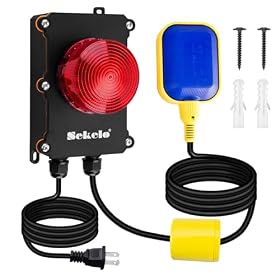
The best sump pump for a finished basement is a dependable primary pump sized for your discharge height, paired with backup protection if flooding could damage finished walls, flooring, or valuables. Here is how to choose the right setup without relying on horsepower alone.
Best sump pump for a finished basement
The best sump pump for a finished basement is a reliable primary pump with enough capacity for your home’s discharge height, a dependable switch, and a backup plan for power outages. Because a finished basement can suffer expensive damage quickly, the right choice is usually a complete pumping system—not simply the pump with the highest horsepower.
Before buying, check the vertical lift from the pump to the discharge outlet, the pipe size, the basin depth, and whether your area experiences outages during heavy storms. If the basement contains a furnace, electrical equipment, bedrooms, or valuable belongings, consider a backup pump or backup power system as part of the installation.
What matters most in a finished-basement sump pump
Pump capacity at your actual head height
Sump pumps are often advertised by horsepower or maximum gallons per hour, but those figures can be misleading. A pump’s output decreases as it pushes water higher and through more fittings.
Measure or estimate:
The vertical distance from the pump to the point where water exits the home
The length and diameter of the discharge pipe
The number of elbows, check valves, and other restrictions
Whether the discharge line runs uphill for part of its route
Use the pump’s flow rating at a comparable total dynamic head, not only its maximum or zero-lift flow rate. The manufacturer’s performance chart is the most useful specification for this decision.
A pump that is too small may not keep up during heavy rain. An oversized pump can cycle more frequently if the basin fills quickly and may not be the best fit for a small or shallow pit. Match capacity to the drainage conditions and plumbing rather than choosing by horsepower alone.
A dependable switch
The float or electronic switch starts the pump as water rises and stops it after the level falls. Switch design affects reliability, basin-size requirements, and the risk of short cycling.
Common options include:
Tethered floats: Often require a wider basin because the float swings outward. They can work well where there is sufficient clearance.
Vertical floats: Move up and down in a narrower path and are often better suited to compact basins.
Electronic or sensor switches: Avoid some moving parts but still require correct installation and cleaning. Follow the manufacturer’s instructions carefully.
The switch must move freely without touching the pump, basin wall, discharge pipe, or power cord. A finished basement installation should also have an alarm or other indication if the water level rises unexpectedly.
Construction and serviceability
A sump pump may have a plastic or metal motor housing. The material alone does not determine whether a pump is appropriate. More important considerations include the manufacturer’s intended use, corrosion resistance, warranty, replacement-part availability, and whether the pump can be serviced without removing unnecessary plumbing.
Look for a design that lets you inspect or replace the check valve and clean the inlet screen. Keep the pump accessible after installation; burying it behind permanent finishes makes future maintenance more difficult.
Noise and vibration
Noise matters more in a finished basement used as a living space. Vibration can transfer through rigid discharge piping and framing, even when the motor itself is not unusually loud.
To reduce noise:
Keep the pump level and stable on the basin floor
Use properly supported discharge piping
Avoid allowing the pipe to contact the basin, joists, or wall framing
Follow the manufacturer’s instructions for any flexible connector
Keep the check valve oriented correctly
Do not trade reliability for quiet operation. A slightly louder pump that is correctly sized and maintained is preferable to a quiet installation that cannot handle the water load.
The best setup for most finished basements
For many homes, the most practical arrangement is:
A primary pump sized using its flow at the actual discharge height
A correctly installed check valve
A rigid, properly supported discharge line
A high-water alarm
Backup pumping or backup power if flooding would cause serious damage
A backup system can use a separate battery-powered pump, a battery backup connected to a primary pump, or a generator-supported primary pump. These options are not interchangeable.
Battery backup pump
A separate battery backup pump can continue removing water if the primary pump fails or utility power is lost. Check the backup pump’s rated capacity, the expected battery run time, charger requirements, and whether the backup has its own discharge path or shares plumbing with the primary system.
Battery runtime depends on the pump’s load, water inflow, battery condition, temperature, and cycling frequency. A battery backup is not a guarantee of indefinite operation during a prolonged outage. Test the system according to the manufacturer’s instructions and replace the battery at the recommended interval.
Generator backup
A generator may power the primary pump and other essential equipment, but it must be sized and connected correctly. Portable generators must remain outdoors, away from doors, windows, and vents, because carbon monoxide can be fatal. Never connect a generator to household wiring through an improvised connection. Use a properly installed transfer switch or have a qualified electrician design the connection.
Water-powered backup pump
A water-powered backup pump may be an option where local water pressure and plumbing codes permit it. These systems use municipal water and may consume a significant amount of water while operating. They are not appropriate for every home, especially where water pressure is inadequate or a private well is involved.
Product prices and availability are accurate as of the date/time indicated and are subject to change. Any price and availability information displayed on Amazon.com at the time of purchase will apply to the purchase of this product.
Features worth prioritizing
When comparing pumps, prioritize these specifications and features:
Flow at the required head: More useful than the headline maximum flow rate
Correct discharge size: The pump and plumbing should be compatible with the manufacturer’s requirements
Switch clearance: The float must operate without obstruction
High-water alarm compatibility: Especially important in a finished space
Check-valve compatibility: The valve should match the pipe size and installation orientation
Serviceable design: Easier access can reduce future repair costs
Backup compatibility: Consider whether the basin has enough room for a second pump
Warranty and replacement parts: Important for equipment that protects the basement
A cast-metal housing, higher horsepower rating, or premium control panel does not automatically make a pump the right choice. The installation conditions and performance curve matter more.
Product prices and availability are accurate as of the date/time indicated and are subject to change. Any price and availability information displayed on Amazon.com at the time of purchase will apply to the purchase of this product.
Basin and discharge requirements
The pump cannot compensate for a poorly designed basin or discharge system. The basin should be deep and wide enough for the pump and switch to operate without interference. If you plan to install a backup pump, confirm that there is room for both pumps while maintaining proper float movement.
The discharge line should carry water away from the foundation and comply with local requirements. Protect the line from freezing, and do not direct water toward the foundation, a neighboring property, a septic system, or a location where it can return to the basement.
A check valve helps prevent water in the discharge pipe from flowing back into the basin when the pump stops. It does not replace a properly routed discharge line, and it should not be used to conceal an undersized or obstructed pipe.
Product prices and availability are accurate as of the date/time indicated and are subject to change. Any price and availability information displayed on Amazon.com at the time of purchase will apply to the purchase of this product.
Installation and safety considerations
Disconnect power before handling the pump. Keep electrical connections out of standing water, use a properly grounded outlet with appropriate ground-fault protection where required, and do not use an extension cord as a permanent installation.
Follow the pump manufacturer’s instructions for pipe size, switch adjustment, check-valve placement, and testing. If the basin, wiring, discharge route, or backup system requires changes to household electrical or plumbing systems, consult a qualified professional and check local code requirements.
After installation, pour water into the basin and confirm that:
The pump starts at the intended water level
The switch moves freely
The pump stops without excessive cycling
The check valve prevents obvious backflow
Water exits well away from the foundation
No pipe joints leak
The alarm activates at the appropriate level
The backup system starts when its test procedure is performed
When to replace rather than repair
Repair may make sense when the problem is a clogged inlet, stuck switch, failed check valve, loose fitting, or worn replaceable component. Replacement is usually more reasonable when the motor repeatedly trips a breaker, makes grinding sounds, overheats, leaks from the housing, or cannot maintain adequate flow at the required head.
Replace a pump before failure if it is difficult to start, runs continuously during normal conditions, has visible corrosion or damage, or is old enough that replacement parts are unavailable. In a finished basement, planned replacement is generally less costly than waiting for a failure during a storm.
Bottom line
Choose a sump pump for a finished basement based on flow at your actual discharge height, dependable switch operation, correct plumbing, and serviceability. Add a high-water alarm and consider a separate backup pump or backup power when a flooded basement would cause major damage. The best pump is the one properly matched to the basin and discharge system—and supported by a tested backup plan.
FAQ
What size sump pump is best for a finished basement?
There is no universal horsepower or flow rating that fits every home. Choose a pump using its performance at your total discharge height, pipe size, and plumbing layout. A manufacturer’s performance chart is more useful than maximum flow at zero lift.
Do I need a backup sump pump for a finished basement?
A backup is strongly worth considering if the basement contains finished flooring, drywall, furniture, mechanical equipment, or valuables. Choose between a separate battery-powered pump, battery backup power, a generator, or a water-powered system based on local conditions and outage risk.
How often should a sump pump be tested?
Test the primary pump and any backup system periodically by adding water to the basin according to the manufacturer’s instructions. Confirm that the switch starts and stops the pump, the discharge line is clear, and the alarm works. Follow the manufacturer’s maintenance schedule.
Can I install a sump pump myself?
A basic pump replacement may be manageable for a homeowner who can safely handle the plumbing and electrical connections. New basin work, permanent wiring, generator connections, discharge changes, or code-sensitive installations should be handled or inspected by qualified professionals.
Why does a sump pump run constantly?
Common causes include heavy groundwater inflow, an undersized pump, excessive discharge height, a clogged or restricted discharge line, a stuck switch, a failed check valve, or water returning through the discharge pipe. Disconnect power before inspecting the system and seek professional help if the motor or wiring is involved.