Battery Tender for a Backup Sump System: What to Buy
A backup sump pump needs the right charger—not just any automotive battery tender. Match the charger to the pump system’s battery type, voltage, connector, and charging requirements before buying.
Battery tender for a backup sump system
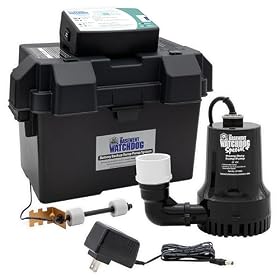
A backup sump system needs a charger that can safely maintain its battery and recharge it after an outage. Although people often call these devices “battery tenders,” the correct choice is usually a charger or maintainer specifically compatible with the backup sump pump, battery chemistry, and system voltage. An ordinary automotive tender may not provide the correct charging profile or connection.
Battery tender vs. sump pump battery charger
A battery tender or maintainer is designed to keep a mostly charged battery at an appropriate level over time. A sump pump backup charger may also need to restore a battery after it has powered the pump during an extended outage.
Before buying, check the backup pump manual or the label on the existing charger for:
Battery voltage: Common systems use a low-voltage battery, but the required voltage varies by system. Match it exactly.
Battery chemistry: Flooded lead-acid and AGM batteries require different charging behavior. Do not assume a charger for one is suitable for the other.
Charge profile: Look for a charger approved for the specific battery type, with automatic maintenance or float charging when appropriate.
Output and recharge capability: A maintainer may preserve charge well but recharge a heavily depleted battery slowly. Follow the pump manufacturer’s guidance for the required charger capacity.
Connector and polarity: The plug must fit the backup system, and polarity must match. Do not modify wiring unless the manufacturer specifically permits it.
If the sump pump manufacturer sells a replacement charger for your system, that is generally the safest starting point.
What to look for when choosing one
Compatibility with the backup pump
The charger should be listed for your backup pump system or clearly match its electrical requirements. A charger that works with a battery by itself may still be unsuitable for the pump’s charging circuit, alarm system, or wiring harness.
Compare the charger’s:
Input requirements
Output voltage
Charging current
Battery chemistry setting or profile
Connector style
Polarity
Environmental limitations
If any of these details are missing, contact the manufacturer before connecting it.
Support for the battery chemistry
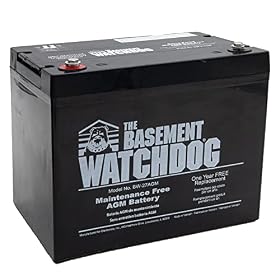
Many backup sump systems use lead-acid batteries, including AGM designs. AGM batteries are sealed and should be charged with a compatible AGM setting or profile when required by the manufacturer. Flooded batteries may require different voltage limits and ventilation precautions.
Do not substitute a lithium battery or lithium charger unless the entire sump system is designed for it. Battery chemistry affects charging voltage, safety controls, and performance during an outage.
Automatic float or maintenance charging
For a battery that remains connected for months, automatic maintenance charging is important. A suitable charger should reduce or regulate its output after the battery reaches the proper charge level rather than continuously applying a high charging current.
Look for manufacturer documentation that explains standby, float, or maintenance operation. Avoid using a basic unregulated power supply as a battery charger.
Enough output for recovery after an outage
A battery tender is useful for standby maintenance, but the backup pump may run for hours during a storm or power failure. Afterward, the battery needs to recover before the next outage.
A charger with too little output may take a long time to restore the battery. A charger with the wrong or excessive output can damage the battery or conflict with the pump system. Use the manufacturer’s recommended charging range instead of choosing solely by the highest amp rating.
Suitable installation conditions
The charger should be installed in a dry, ventilated location away from standing water, splashes, and the sump pit opening. Keep cables away from sharp edges, moving float mechanisms, and hot surfaces. Follow the manufacturer’s instructions for mounting and ventilation.
For flooded lead-acid batteries, provide the ventilation required by the battery manufacturer. Never place a battery or charger where water from a leaking discharge pipe, plumbing connection, or overflowing basin can reach it.
Product prices and availability are accurate as of the date/time indicated and are subject to change. Any price and availability information displayed on Amazon.com at the time of purchase will apply to the purchase of this product.
Can you use an automotive battery tender?
Sometimes, but only if the tender’s voltage, battery chemistry, charging profile, output, connector, and polarity all match the backup sump system. The pump manufacturer must also allow that type of charger.
An automotive tender may be a poor choice when:
It is intended for a different battery voltage.
It only supports starting batteries rather than deep-cycle batteries.
It lacks the correct AGM or flooded-battery profile.
It has no compatible connector.
It cannot recharge the battery at the rate the sump system requires.
It bypasses the system’s built-in charger, alarm, or monitoring functions.
Do not splice leads or reverse polarity to make an incompatible tender fit. Use the approved replacement charger or have the setup reviewed by a qualified professional.
Product prices and availability are accurate as of the date/time indicated and are subject to change. Any price and availability information displayed on Amazon.com at the time of purchase will apply to the purchase of this product.
Battery considerations for a backup sump system
The charger is only one part of the backup system. The battery should be a deep-cycle type approved for the pump. A car starting battery is designed for short bursts of engine starting and may not tolerate repeated, extended pump operation as well.
Replace the battery when it is swollen, leaking, cracked, badly corroded, unable to hold a charge, or past the service interval recommended by its manufacturer. A charger cannot restore a battery that has permanently lost capacity.
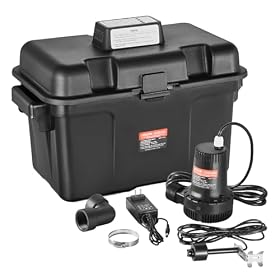
Use a battery box when the pump manufacturer recommends one. The box can help contain corrosion and protect the battery, but it must not prevent required ventilation or make inspection and maintenance difficult.
Product prices and availability are accurate as of the date/time indicated and are subject to change. Any price and availability information displayed on Amazon.com at the time of purchase will apply to the purchase of this product.
Installation and safety checklist
Before connecting a charger:
Read the backup pump and battery instructions.
Confirm the battery voltage and chemistry.
Unplug power before handling exposed electrical connections, unless the instructions require a different sequence.
Inspect the battery case, terminals, cables, and charger for damage.
Place the charger away from water and possible flooding.
Connect positive and negative leads exactly as marked.
Restore power and confirm the charger’s status indicator.
Test the backup pump according to the manufacturer’s procedure.
Check that the pump’s alarm or monitoring function still operates.
A sump pit is a wet location. Keep household electrical connections and extension cords away from water, and use the required grounded, protected receptacle. If wiring, grounding, or circuit protection is uncertain, consult a qualified electrician.
Troubleshooting a backup battery that is not staying charged
Check the charger indicator and power source
Confirm that the charger is receiving power and that its indicator shows normal operation. Check the circuit breaker or GFCI if applicable, but do not repeatedly reset a device that trips again. A recurring trip requires investigation.
Inspect the connections
Look for loose terminals, corrosion, damaged insulation, or a partially inserted connector. Disconnect power before cleaning or tightening connections, and follow the battery manufacturer’s instructions. Do not handle a damaged or leaking battery.
Confirm the charger matches the battery
A mismatched voltage or battery profile can prevent proper charging. Verify the charger settings and compare them with the battery label and pump manual.
Check whether the battery is worn out
If the charger indicates a full charge but the pump quickly loses power during a test, the battery may have reduced capacity. A battery load test or replacement may be appropriate; use the test method recommended by the manufacturer.
Check the backup pump’s runtime demands
A pump that runs frequently, has a blocked discharge line, or is handling unusually high inflow may drain the battery faster than the charger can restore it. Inspect the discharge line, check valve, float movement, and pump operation before assuming the charger is defective.
Replace the charger when it has failed indicators, damaged cables, overheating, a burning smell, or inconsistent charging. Replace the entire backup system when the charger, pump, battery, alarm, or control board is obsolete or when compatible replacement parts are no longer available.
Bottom line
Choose a sump backup battery charger by compatibility, not by the generic label “battery tender.” Match the system voltage, battery chemistry, charge profile, output, connector, and installation requirements. The manufacturer’s replacement charger is usually the lowest-risk option, especially when the backup pump has an integrated alarm or charging circuit.
FAQ
Can I use a trickle charger on a backup sump pump battery?
Only if the charger is approved for the battery’s voltage and chemistry and is compatible with the backup sump system. A basic unregulated trickle charger may overcharge or damage the battery.
Is a battery tender the same as a sump pump battery charger?
Not necessarily. A tender usually maintains a charged battery, while a sump pump charger may be designed to recharge a deeply discharged deep-cycle battery and work with the system’s alarm or controls.
What type of battery is best for a battery backup sump pump?
Use the battery type specified by the pump manufacturer, commonly an approved deep-cycle lead-acid or AGM battery. Do not substitute a car starting battery or lithium battery without explicit system approval.
Why does my backup sump battery keep going dead?
Possible causes include a failed charger, incorrect charger profile, loose or corroded connections, an aging battery, frequent pump operation, or a discharge-line problem that makes the pump run excessively. Check these in that order and follow the manufacturer’s test procedure.