A 1/2 HP sump pump is not automatically the better choice. Compare the pump’s flow at your actual discharge height, basin setup, switch, and backup plan before choosing between 1/3 HP and 1/2 HP.
What do you need help with?
Open an answer, or tell us what we should cover next.
Answered in this guide
Choose between a 1/3 HP and 1/2 HP sump pump
Choose the better pump size by comparing actual discharge height, pipe conditions, expected water inflow, basin setup, switch operation, energy use, and the pump’s overall fit.
Understand what a sump pump’s horsepower rating means
Horsepower describes motor size, not the exact amount of water a pump moves. Flow also depends on the pump design, discharge height, pipe, switch, and operating conditions.
Compare pump performance at different discharge heights
At a short lift, a 1/3 HP pump may provide enough capacity. Greater height, longer pipe runs, fittings, or heavy inflow can make the extra capacity of a 1/2 HP pump more useful.
A larger pump is not always a better fit for a small basin. Limited float movement can cause frequent starts and stops, or short cycling, which may reduce pump life.
Request a topic and help us choose what to build next.
Measure the sump pump’s actual static head
Calculate the flow rate needed at the actual head height
Install a battery or water-powered sump pump backup
Use a dirty-water pump as a temporary sump backup
Requests help us prioritize the next guide. No email required.
One anonymous request per topic.
A 1/2 HP sump pump is not automatically the right upgrade from a 1/3 HP sump pump. The better choice depends on how much water enters the basin, how high and far the pump must discharge it, the discharge-pipe size, and whether the pump runs occasionally or during long storms. Compare performance at your actual pumping height—not horsepower alone.
Quick answer
Choose a 1/3 HP sump pump when the water inflow is moderate, the discharge run is relatively short, and the pump does not need to overcome much vertical lift. It can be a sensible fit for a typical residential basin with a manageable water load.
Choose a 1/2 HP sump pump when the pump must lift water higher, move it farther, handle heavier inflow, or provide more capacity during prolonged storms. It is especially worth considering when the existing 1/3 HP pump struggles to keep up, runs nearly continuously, or cannot maintain the water level during peak rainfall.
However, a larger motor cannot compensate for a badly restricted discharge line, a failing check valve, a clogged inlet, or an undersized basin. Confirm the whole system before replacing the pump.
What the horsepower rating tells you
Horsepower is a motor-size rating, not a direct measurement of how much water the pump will deliver. Two pumps with the same horsepower can have different flow rates, maximum head heights, switch designs, and resistance to solids.
The specifications that matter most are:
Flow at total head: This indicates how much water the pump moves after accounting for vertical lift and discharge resistance.
Maximum head: This is the approximate height at which the pump can no longer move water effectively. It is not the same as the recommended operating height.
Discharge size: A pump designed for a larger discharge outlet may lose performance when connected to a restrictive or incorrectly sized pipe.
Switch type and range: A tethered float, vertical float, pressure switch, or electronic control can affect cycling and the water level in the basin.
Solids-handling capability: This matters when sediment or small debris can enter the pit.
Duty rating: A pump intended for continuous or heavy-duty operation may be better suited to a high-water-inflow installation.
Read the manufacturer’s performance chart and compare the flow at your installation’s total head. A pump’s advertised flow at zero lift is not a useful comparison if it must push water several feet upward and through a long discharge run.
Product prices and availability are accurate as of the date/time indicated and are subject to change. Any price and availability information displayed on Amazon.com at the time of purchase will apply to the purchase of this product.
How to compare 1/3 HP and 1/2 HP pumps
At low pumping height
At a short vertical lift with a short, properly sized discharge line, either pump may provide adequate capacity. In this situation, a 1/2 HP model may not produce a meaningful benefit if the basin receives only a modest amount of water.
The 1/3 HP option may be preferable when it meets the required flow and has a suitable switch and construction. Avoid choosing solely by the lowest purchase price; a pump that cycles excessively or cannot handle the inflow is a poor fit regardless of horsepower.
At greater pumping height
As vertical lift increases, pump flow usually decreases. Long horizontal runs, elbows, narrow pipe, and restrictive check valves add further resistance. A 1/2 HP pump often provides more useful capacity in a demanding installation, but verify this on the performance curve.
Measure from the pump’s water outlet to the point where the discharge water exits. Then account for the pipe route, bends, and any components that restrict flow. Compare that total head with the manufacturer’s chart rather than relying on the maximum-head number alone.
During heavy inflow
If water enters the basin faster than the 1/3 HP pump can remove it, the pump may run continuously while the water level continues to rise. A 1/2 HP pump can be a reasonable upgrade when the issue is insufficient pumping capacity and the discharge system can support the added flow.
Before upgrading, check whether the problem is actually caused by a clogged inlet screen, blocked discharge pipe, stuck float, failed check valve, or a partially closed discharge arrangement. Fixing one of these problems may restore a properly sized pump’s performance.
Product prices and availability are accurate as of the date/time indicated and are subject to change. Any price and availability information displayed on Amazon.com at the time of purchase will apply to the purchase of this product.
When a 1/2 HP pump is the better choice
A 1/2 HP pump deserves consideration when one or more of these conditions apply:
The discharge point is substantially higher than the pump.
The discharge pipe travels a long distance or includes several bends.
The basement receives heavy groundwater or storm inflow.
The existing pump runs for long periods during wet weather.
The water level rises too close to the top of the basin.
The pump needs to recover quickly after a power interruption.
The manufacturer’s performance chart shows inadequate flow from the 1/3 HP option at your total head.
A higher-capacity pump may reduce the time needed to lower the water level, but it can also cycle more aggressively if the basin is small or the switch is poorly adjusted. Confirm that the basin, float movement, discharge line, and electrical circuit are appropriate for the selected pump.
Product prices and availability are accurate as of the date/time indicated and are subject to change. Any price and availability information displayed on Amazon.com at the time of purchase will apply to the purchase of this product.
When a 1/3 HP pump may be enough
A 1/3 HP pump may be adequate when:
The water inflow is moderate and predictable.
The pump has sufficient flow at the actual discharge height.
The discharge route is short and not heavily restricted.
The pump starts and stops normally without running continuously.
The basin has enough volume for the switch to operate without rapid cycling.
The water level remains safely below the top of the pit during heavy rain.
A smaller pump is not necessarily less reliable. Correct sizing, a clean basin, a free-moving switch, and a good discharge system are often more important than selecting the largest available motor.
Product prices and availability are accurate as of the date/time indicated and are subject to change. Any price and availability information displayed on Amazon.com at the time of purchase will apply to the purchase of this product.
Check the discharge system before buying a stronger pump
A pump upgrade may disappoint if the discharge line is the limiting factor. Inspect the following:
Discharge pipe: Look for crushing, ice, sediment, or a restriction near the outlet.
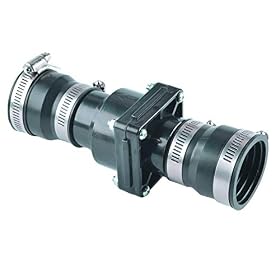
Check valve: Confirm that it opens in the correct direction and is not stuck or leaking excessively.
Pipe size and transitions: Avoid unnecessary reductions that restrict flow.
Elbows and sharp bends: Each bend adds resistance, particularly in a long discharge run.
Outdoor outlet: Make sure water exits away from the foundation and cannot flow back toward the basin.
Air or freeze problems: In cold climates, protect the discharge route from freezing while following local installation requirements.
Do not remove or alter a check valve without understanding the system design. Water can flow back into the basin after the pump stops, causing extra cycling or a rapid restart.
Basin size and switch operation matter
A 1/2 HP pump can be a poor match for a small basin if the float has little room to move. The pump may start and stop frequently, a condition known as short cycling. Frequent cycling can increase wear on the motor, switch, and electrical components.
Check that:
The float can move freely without touching the pump, pipe, cord, or basin wall.
The pump sits level and remains stable.
The pump turns on before the water reaches an unsafe level.
The pump shuts off without leaving the motor running dry.
The basin cover and plumbing do not interfere with the switch.
Follow the manufacturer’s instructions for minimum basin dimensions and switch clearance. If the basin is too small for the desired pump and switch arrangement, changing horsepower alone will not solve the problem.
Energy use and operating cost
A 1/2 HP pump may draw more electrical power than a 1/3 HP pump, but the actual difference depends on the motor design, operating time, water level, and installation resistance. A pump that moves water faster may run for fewer minutes, so motor horsepower alone does not determine total energy use.
The practical priority is reliable water removal. Do not select an undersized pump simply to reduce electrical consumption if it cannot keep up with the inflow. Conversely, do not install a much larger pump when the discharge line and basin cannot use its capacity effectively.
Installation and electrical safety
Use a grounded receptacle and follow the pump manufacturer’s electrical requirements. Keep plug connections and extension cords out of standing water; avoid using an extension cord unless the manufacturer specifically permits it and the cord is properly rated for the application.
Before servicing the pump, unplug it or disconnect power according to the manufacturer’s instructions. Never reach into a sump basin while the pump may start automatically. If the receptacle, wiring, breaker, or grounding is questionable, have a qualified electrician inspect it.
A new pump should be checked during operation for leaks, abnormal noise, unstable movement, and proper shutoff. Route the discharge so expelled water cannot return to the foundation.
A practical selection process
Use this order when deciding between 1/3 HP and 1/2 HP:
Estimate the water inflow during the heaviest conditions you expect.
Measure the vertical lift from the pump outlet to the discharge point.
Note the pipe length, diameter, bends, check valve, and outlet arrangement.
Compare both pumps’ flow at that total head.
Confirm basin size, float clearance, and switch behavior.
Check the pump’s solids-handling and duty specifications.
Decide whether a backup pump or battery backup is needed.
If the current pump keeps up comfortably and the installation has no warning signs, replacing it with the same general capacity may be reasonable. If it cannot keep up at peak inflow, choose a model with adequate flow at the actual head—or have a professional evaluate whether a second pump, larger discharge, or drainage improvement is more appropriate.
When to replace the pump instead of upgrading it
Replacement is reasonable when the motor hums without pumping, trips the breaker, leaks oil or water from the housing, starts inconsistently, or makes grinding noises. Also replace a pump when its performance has clearly declined after you have ruled out a clogged inlet, blocked discharge, failed check valve, or switch problem.
If flooding could cause major damage, a backup sump pump with an independent power source may provide more protection than simply moving from 1/3 HP to 1/2 HP. No primary pump should be treated as a guarantee against flooding, especially during outages or extreme storms.
FAQ
Is a 1/2 HP sump pump better than a 1/3 HP pump?
Not in every installation. A 1/2 HP pump is generally more suitable for higher lift, longer discharge runs, or heavier water inflow, but compare flow at the actual total head. A 1/3 HP pump can be sufficient when the inflow and discharge requirements are modest.
Will a 1/2 HP sump pump use more electricity?
It may draw more power while operating, but total energy use also depends on how long the pump runs and how efficiently it moves water through the discharge system. Horsepower alone does not determine operating cost.
Can I replace a 1/3 HP sump pump with a 1/2 HP pump?
Usually only after confirming that the basin, switch clearance, discharge pipe, check valve, circuit, and manufacturer requirements are suitable. A larger pump can short-cycle in a small basin or remain limited by a restricted discharge line.
What is more important than horsepower when sizing a sump pump?
Flow at the installation’s total head is usually more useful than horsepower. Total head includes vertical lift and resistance from pipe length, bends, valves, and other restrictions.
Should I choose a 1/2 HP pump if my current 1/3 HP pump runs continuously?
First inspect the filter or inlet, float, discharge pipe, check valve, and leaks. If those are clear and the pump still cannot keep up with the inflow, a 1/2 HP pump or another drainage solution may be appropriate based on its performance chart.