Electricity cost of a sump that runs after every rain
A sump pump that runs after every rain may use less electricity than expected, but frequent or continuous cycling can signal a discharge, check-valve, float, or drainage problem. Use the pump’s wattage and your electric rate to calculate the actual cost, then troubleshoot the cause of excessive runtime.
Electricity cost of a sump that runs after every rain
A sump pump that runs after every rain can add anywhere from a few cents to several dollars per storm, depending on its wattage, total runtime, and local electricity rate. The basic calculation is simple: multiply the pump’s power use by the hours it runs, then multiply that energy use by your electric rate.
Frequent operation is not automatically a problem. A high water table, heavy rain, or foundation drainage system may legitimately send water into the pit. However, a pump that runs for hours after a modest storm—or cycles every few minutes—may have a clogged discharge, leaking check valve, incorrect float setup, or another issue worth correcting.
How to calculate sump pump electricity cost
Use this formula:
Cost = pump watts ÷ 1,000 × runtime in hours × electricity rate per kWh
You need three figures:
Pump wattage: Find the watts on the motor label, owner’s manual, or manufacturer specifications. If only volts and amps are listed, watts are approximately volts × amps, although the pump’s actual running consumption can vary.
Runtime: Estimate how many total hours the pump operates during the rain event. A pump that cycles on and off for three hours has three hours of combined running time—not three hours of continuous operation unless it never stops.
Electricity rate: Check the rate per kilowatt-hour on your utility bill. Include the energy charge when making a rough calculation; taxes, delivery charges, and tiered rates can make the final bill different.
Example calculation
Suppose a sump pump is rated at 800 watts, runs for 2.5 total hours after a storm, and electricity costs $0.20 per kilowatt-hour:
0.8 kW × 2.5 hours × $0.20 = $0.40
That storm would use about 40 cents of electricity under those assumptions. The figures are only an example; use your own pump’s nameplate wattage, runtime, and utility rate for a meaningful estimate.
Product prices and availability are accurate as of the date/time indicated and are subject to change. Any price and availability information displayed on Amazon.com at the time of purchase will apply to the purchase of this product.
Estimating monthly and seasonal cost
To estimate a monthly cost, add the pump’s total runtime for each rain event during the month. For example, if it runs for 2 hours after one storm, 1 hour after another, and 3 hours after a third, the monthly runtime is 6 hours.
A pump that runs briefly and occasionally may have a minor effect on the bill. A pump that operates many hours every week can cost more, especially if it is a large motor or your electricity rate is high. A pump running continuously can also overheat, wear out its motor, and leave little reserve capacity for the next storm, so the reliability concern may be more important than the electricity cost.
Add protection if frequent pumping creates a single-point failure
Product prices and availability are accurate as of the date/time indicated and are subject to change. Any price and availability information displayed on Amazon.com at the time of purchase will apply to the purchase of this product.
Why the pump runs after every rain
The water table or drainage system is doing its job
Some basements receive groundwater after nearly every storm. If the pump runs for a reasonable period, stops normally, and the pit remains dry between storms, frequent operation may be expected. Heavy soil, a high water table, or footing drains can keep sending water to the basin after the rain has stopped.
Do not disconnect a working pump simply to reduce electricity use. Preventing basement flooding is its primary purpose.
The discharge line is restricted
A blocked, crushed, frozen, or undersized discharge line can reduce the amount of water removed with each cycle. Check the outdoor outlet for mud, ice, leaves, or other obstructions. Confirm that water is actually being discharged away from the foundation when the pump runs.
Do not remove a discharge fitting or alter the plumbing unless the change complies with local requirements and the pump manufacturer’s instructions. Water should not simply be dumped next to the foundation, where it can return to the pit.
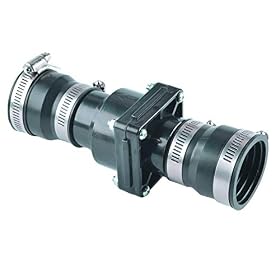
The check valve is leaking or installed incorrectly
A check valve keeps water in the discharge pipe from flowing back into the basin after the pump shuts off. If it leaks, the pump may stop and then restart shortly afterward as the same water returns.
Listen for a strong rush of water flowing back into the pit after shutdown. Inspect accessible connections for loose clamps, cracks, or a valve installed in the wrong flow direction. Replace a failed valve with a compatible sump-pump check valve and follow the valve’s flow-direction marking.
The float switch is obstructed or set incorrectly
A tethered or vertical float needs enough room to move freely. Remove stored items, insulation, cords, or debris that may interfere with it. Make sure the float is not rubbing against the basin wall or discharge pipe.
The pump should start and stop at the intended water levels. A switch that starts the pump too frequently, fails to shut it off, or sticks in the on position should be replaced with a compatible part or evaluated by a qualified professional.
The basin is too small or the pump cycles too often
A small basin can cause short cycling when water enters rapidly. Repeated starts are hard on the motor and switch, even when each cycle is brief. Do not enlarge or replace a sump basin without checking local building requirements and the installation guidance for the drainage system.
The pump or installation is undersized
A pump may run for a long time if it cannot move incoming water fast enough. Actual output depends on more than the advertised horsepower: vertical lift, pipe diameter, bends, check valve, and discharge length all affect flow.
If the pump runs continuously during ordinary rain, compare the installation’s lift and discharge requirements with the pump’s published performance curve. A larger pump is not always the right answer; an improperly designed discharge line can also reduce performance.
A practical check order
Before replacing the pump, work through these checks:
Confirm the runtime. Observe whether the pump runs continuously, cycles every few minutes, or operates only when the pit reaches its normal level.
Inspect the basin. Remove loose debris that could obstruct the inlet or float. Disconnect power before reaching into the basin, and never place your hands near a running pump.
Check the discharge. Look for blockage, freezing, crushed pipe, leaks, and water returning through the line.
Inspect the check valve. Listen for backflow and check for leaks or incorrect installation.
Check the float and setup. Make sure the float moves freely and the pump sits upright on a stable base if the manufacturer requires one.
Consider water conditions. Compare this storm with previous storms. Unusually long operation may reflect a higher water table, saturated soil, or a new drainage problem rather than a failed motor.
Evaluate the motor last. Grinding, burning smells, unusual vibration, tripped breakers, or reduced discharge can indicate pump wear or an electrical problem.
Unplug the pump before inspecting or cleaning it. Keep electrical connections dry, use the required grounded outlet and ground-fault protection, and follow the manufacturer’s instructions. Have a qualified electrician inspect repeated breaker trips, damaged wiring, or suspected electrical faults.
Should you replace the pump to lower the electric bill?
Usually, no—not before identifying why it runs so often. A newer pump may be more efficient, but replacing a correctly operating pump will not eliminate the water entering the pit. A failing check valve, obstructed discharge, bad float switch, or poor drainage layout may be the real cause.
Replacement becomes reasonable when the pump is old, noisy, unreliable, unable to keep up with normal inflow, or showing signs of motor failure. If flooding would cause serious damage, consider a properly installed backup pump or battery backup system rather than relying on a single pump.
An inexpensive plug-in electricity meter may help estimate actual energy use, but use one only where its electrical rating and environment are appropriate. Do not place a non-water-resistant meter or connection where it can be splashed or submerged.
The short answer
Calculate the cost with watts ÷ 1,000 × hours running × price per kWh. A few hours of operation after a storm often costs less than homeowners expect, but a pump that runs constantly or cycles every few minutes should be investigated. Check the discharge path, check valve, float, basin, and installation before assuming the motor needs replacement.
How much electricity does a sump pump use per hour?
It depends on the pump’s actual wattage. Divide the listed watts by 1,000 to get approximate kilowatt-hours used per hour, then multiply by your electricity rate. A pump rated at 800 watts, for example, uses about 0.8 kWh per hour while running, before accounting for variation in actual load.
Is it normal for a sump pump to run after every rain?
It can be normal if the home has a high water table, saturated soil, or effective footing drainage. The pump should still shut off normally and discharge water away from the foundation. Long continuous operation or rapid cycling deserves inspection.
Why does my sump pump keep turning on every few minutes?
Common causes include water flowing back through a failed check valve, a discharge restriction, a float that is obstructed or poorly adjusted, a small basin, or unusually high inflow. Check those items before replacing the pump.
Does a larger sump pump use more electricity?
Often it can, because larger motors may draw more power, but wattage varies by design. Compare the pump’s rated watts and performance at the required vertical lift rather than choosing by horsepower alone.
When should I replace a sump pump that runs frequently?
Replace it when it cannot keep up with normal inflow, fails to start or stop reliably, makes abnormal noises, trips protection devices, or shows motor damage. If the pump works normally but runs frequently because of groundwater, correct the drainage issue or add appropriate backup protection instead of replacing it solely to reduce runtime.