A French drain without a pit can move water away by gravity only if there is a suitable lower outlet. If water has nowhere to drain, a sump basin and pump are usually needed to remove it.
The short answer
A French drain with no pit can work when the drain has a continuous downhill route to a safe, legal outlet. It collects water and carries it away by gravity. A sump pump is the better fit when water collects below the level of an outlet, the site is flat, or groundwater needs to be lifted and discharged elsewhere.
These systems are not always alternatives: a perimeter French drain may collect water and feed a sump basin, where a pump sends it away. The deciding question is whether gravity can reliably carry the water to an acceptable discharge point.
How the systems differ
French drain with no pit
Sump pump system
How water moves
Gravity through a sloped drain to an outlet
A pump lifts water from a basin and sends it through a discharge line
Best fit
There is enough slope and a suitable outlet
Water collects too low for gravity drainage, or the property lacks a usable downhill route
Main dependencies
Drain slope, outlet location, soil and drain design
Basin, pump, power, float operation, and an unobstructed discharge line
Main limitation
It cannot move water uphill or overcome a high outlet
It depends on working equipment and power; a backup may be needed where flooding risk is high
A French drain generally consists of a gravel-filled trench and perforated pipe that collects water. “No pit” does not mean no excavation: the trench still needs a designed route, and the outlet must not send water toward the foundation or a neighbor. Local rules may restrict where drainage water can go.
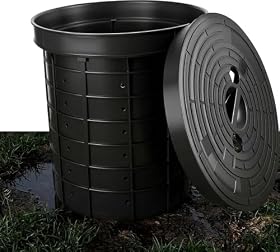
A sump system collects water in a basin below the floor or surrounding grade. The pump activates as water rises and pushes it through a discharge line. Many basement drainage systems use both a perimeter drain and a sump basin.
Product prices and availability are accurate as of the date/time indicated and are subject to change. Any price and availability information displayed on Amazon.com at the time of purchase will apply to the purchase of this product.
Choose a French drain without a pit if gravity drainage is feasible
This option may suit a yard or foundation area where water can flow continuously downhill to daylight or another approved outlet. Before choosing it, confirm that:
The route has enough consistent fall; a low spot can leave water standing in the pipe.
The outlet remains clear and does not flood, freeze, or discharge back toward the building.
The soil and drain design allow water to reach the pipe rather than bypassing it.
The discharge location is permitted by local code and does not create a nuisance or erosion problem.
A French drain is not automatically a fix for a high water table or basement seepage. If its outlet is too high, submerged, or unavailable, the drain may collect water without removing it effectively. A drainage contractor can check elevations and outlet conditions before excavation.
Product prices and availability are accurate as of the date/time indicated and are subject to change. Any price and availability information displayed on Amazon.com at the time of purchase will apply to the purchase of this product.
Choose a sump pump when water must be lifted
A sump pump is usually the practical choice when water gathers below the level of any usable gravity outlet. It can also be part of a basement perimeter-drain system: the drain routes water to the basin, and the pump carries it to a discharge point.
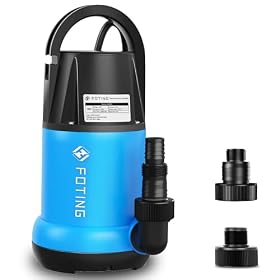
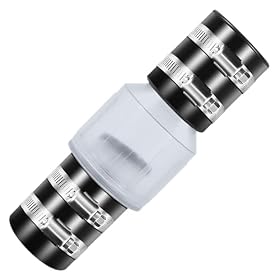
Plan for the complete system, not just the pump. The basin must suit the installation, the pump needs a compatible discharge line and check valve, and the outlet must carry water far enough away without sending it back to the foundation. Consider what happens during a power outage; a backup pump or other backup arrangement may be appropriate in areas with frequent outages or serious flood consequences.
Follow the pump manufacturer’s installation and electrical instructions. Because basement water and electricity are a hazardous combination, have electrical work or uncertain installations handled by a qualified professional.
Product prices and availability are accurate as of the date/time indicated and are subject to change. Any price and availability information displayed on Amazon.com at the time of purchase will apply to the purchase of this product.
Check these conditions before deciding
Find the water source. Roof runoff, poor surface grading, plumbing leaks, and groundwater need different fixes. A drain or pump may not solve the underlying cause.
Identify a legal discharge point. Trace where water could go and whether it will flow downhill all the way. Do not assume a storm sewer connection or discharge across a property line is allowed.
Compare elevations. If water must travel uphill at any point, gravity drainage alone will not work. A pump may be required.
Consider the failure risk. A gravity drain has no motor but can clog or lose its outlet. A sump pump can fail or lose power. Choose maintenance and backup measures accordingly.
Get the drainage layout checked. Foundation drainage can affect the building and nearby properties. For persistent basement water, uncertain outlet elevations, or major excavation, consult a qualified drainage professional and check local requirements.
Bottom line
Choose a French drain without a pit only when the route and outlet support reliable gravity flow. Choose a sump pump when water must be lifted, or combine a perimeter drain with a sump basin when collected water has no dependable gravity exit. If the outlet, elevation, or source of water is unclear, confirm those conditions before committing to either system.
FAQ
Can a French drain work without a sump pit?
Yes, if the drain slopes continuously to a suitable outlet that is lower than the water being collected. Without adequate slope or a reliable outlet, the water may remain in the drain.
Is a French drain the same as a sump pump?
No. A French drain collects and conveys water, usually by gravity. A sump pump lifts water from a basin and sends it through a discharge line. A drainage system can use both.
Does a French drain without a pit work in a flat yard?
Not reliably unless the design provides enough slope to an appropriate outlet. If there is no lower outlet, gravity alone cannot carry the water away.
Do I need a sump basin if I already have a French drain?
Only if the drain cannot discharge effectively by gravity or the system is designed to collect water at a pumped basin. The right layout depends on site elevations, water source, and local discharge rules.