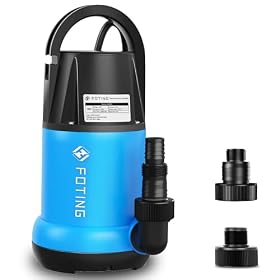
Static head is the vertical rise from the sump water surface while the pump is operating to the point where the discharge water exits. Measure the elevation difference—not the length of the pipe.
What static head measures
Static head is the vertical elevation difference between the water surface in the sump and the point where water leaves the discharge line. It describes how high the pump must lift water before accounting for resistance from pipe, fittings, and valves.
It is not the length of the discharge pipe. A long, nearly level pipe can add friction loss without adding much static head; a short, steep rise can have substantial static head.
Product prices and availability are accurate as of the date/time indicated and are subject to change. Any price and availability information displayed on Amazon.com at the time of purchase will apply to the purchase of this product.
Measure from the pumping water level to the outlet
Find the pump’s normal turn-on water level. This is the water level when the float switch starts the pump. If the level varies, record the usual range; use the manufacturer’s directions when comparing your measurement with a pump curve.
Identify the actual discharge point. For a pipe that empties into open air, use the outlet where water exits—not merely where the pipe passes through the foundation. If it connects to a closed or pressurized system, the calculation may need to account for conditions at that connection.
Measure the vertical difference. Use a tape measure with a level, a laser level, or another reliable way to compare elevations. For example, if the outlet is 6 feet above the sump’s pumping water surface, the static head is about 6 feet.
Record the measurement in feet. If you measure from a shared reference such as the basement floor, subtract the height of the water surface from the height of the outlet.
Use the water surface as the practical starting point for the system’s elevation lift, rather than measuring along the pipe or automatically measuring from the basin bottom. Pump manufacturers may specify a particular measurement reference for their performance charts, so follow that convention when checking pump capacity.
Check unusual pipe routes separately
If the discharge line rises to a high point and then drops to a lower outlet, note both elevations. The outlet elevation determines the basic static lift for an open discharge, while a high point can affect air trapping, priming, and how the line drains. Do not treat the high point as the only head figure without checking the pump and piping instructions.
Also note elbows, long runs, check valves, and other restrictions. They add friction loss, which is part of total dynamic head but is not static head. A pump’s flow rate generally falls as total head increases, so compare the system with the manufacturer’s pump curve rather than relying on static head alone.
Avoid common measurement mistakes
Measuring pipe length: Follow the pipe only when estimating friction; it does not give the vertical lift.
Using the basin bottom as the water level: The water surface is the relevant elevation reference for the system lift.
Measuring to the foundation wall: Continue to the actual outlet if water travels farther before discharging.
Ignoring changing water levels: The pump-on level is a useful practical reference, but note the normal operating range if it varies significantly.
Assuming static head is the whole requirement: Pipe and fitting losses raise the total head the pump must overcome.
Do not reach into a sump or handle pump wiring to take a measurement. Keep the area dry and follow the pump manufacturer’s safety instructions. If the outlet is inaccessible or connects to a buried, shared, or pressurized drain, have a qualified plumber or pump professional confirm the discharge conditions.
FAQ
Do I measure static head from the bottom of the sump pit?
For the system’s elevation lift, use the water surface in the sump while the pump is operating, not the basin bottom. Follow the pump manufacturer’s specified reference when reading its performance chart.
Does a long discharge pipe increase static head?
Not by itself. Static head is the vertical elevation difference. A long pipe can increase friction loss, which contributes to total dynamic head.
Should I measure to the top of a high loop or to the discharge outlet?
For an open discharge, the outlet is the basic endpoint for static lift. Record any higher point in the route separately because it can affect air trapping, priming, or drainage.